

Trimer
Цзянсуський завод отрутохімікатів «Жуй Бан», Джітан , Китай.
Herbicides
0
0
·
1.6K
1 offer
85.35 €per pack
Buy
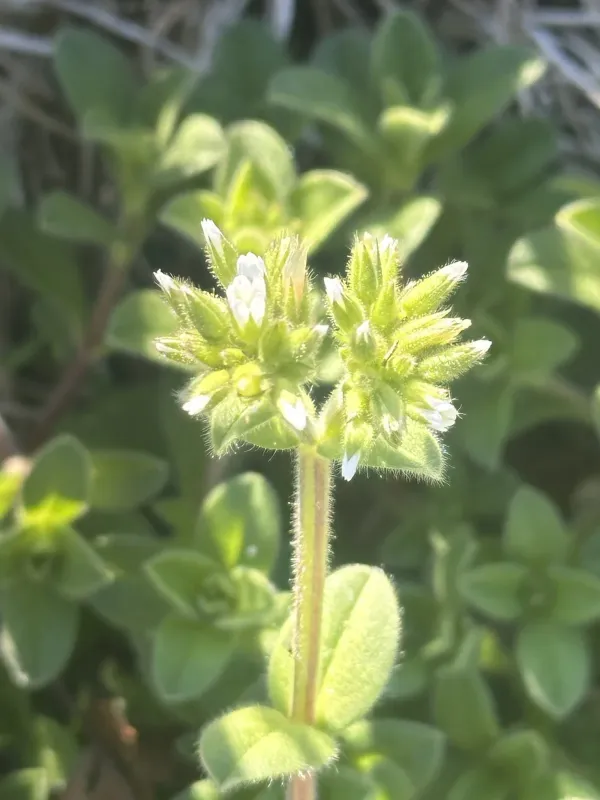
Cerastium, commonly known as mouse-ear chickweed, belongs to the Caryophyllaceae family and is recognized as a widespread weed in many agricultural regions.
The plant is characterized by its small, opposite leaves and hairy stems, which give the plant a greyish or dull green appearance.
Flowers are small with five white petals, each deeply cleft, giving them a star-like appearance when fully opened under sunlight.
The species can be annual or perennial, with the latter often forming dense mats due to their creeping stem growth habit.
Seeds are produced in significant quantities within cylindrical capsules, and they remain viable in the soil seed bank for several years.
This weed is highly adaptable and thrives in a wide range of environments, including pastures, lawns, cultivated fields, and disturbed soil areas.
In agricultural settings, it is a common pest in winter cereals, where it establishes itself early in the season before the crop canopy closes.
It prefers moist but well-drained soil and often colonizes areas with poor crop density, effectively filling gaps in the field.
Cerastium also occupies field margins and edges of roads, serving as a primary source for re-infestation of adjacent cultivated plots.
Its ability to tolerate low temperatures allows it to germinate early, often outcompeting slow-starting crops in spring.
The primary damage caused by Cerastium is the competition for nutrients and water, which stunts the growth of surrounding crop plants.
Due to its mat-forming nature, it can impede soil aeration and increase humidity at the base of the crop, promoting root and stem rot diseases.
It serves as an alternative host for various pests and pathogens, complicating the integrated pest management strategies of the farm.
Significant infestations lead to reduced yield quality and quantity, especially when mechanical harvesting is hindered by the weed biomass.
The accumulation of weed seeds in the soil represents a long-term management challenge, necessitating persistent control efforts over multiple seasons.
Effective management begins with mechanical practices such as shallow cultivation or harrowing, which are best used when the weeds are small.
Optimizing crop nutrition and density helps suppress the growth of Cerastium by creating a competitive environment where the crop dominates.
Chemical control involves the application of appropriate herbicides during the early stages of weed growth for maximum efficacy.
In no-till systems, pre-emergence herbicides can provide the necessary suppression to prevent the weed from establishing a foothold.


