
Triosteum perfoliatum
Triosteum perfoliatum
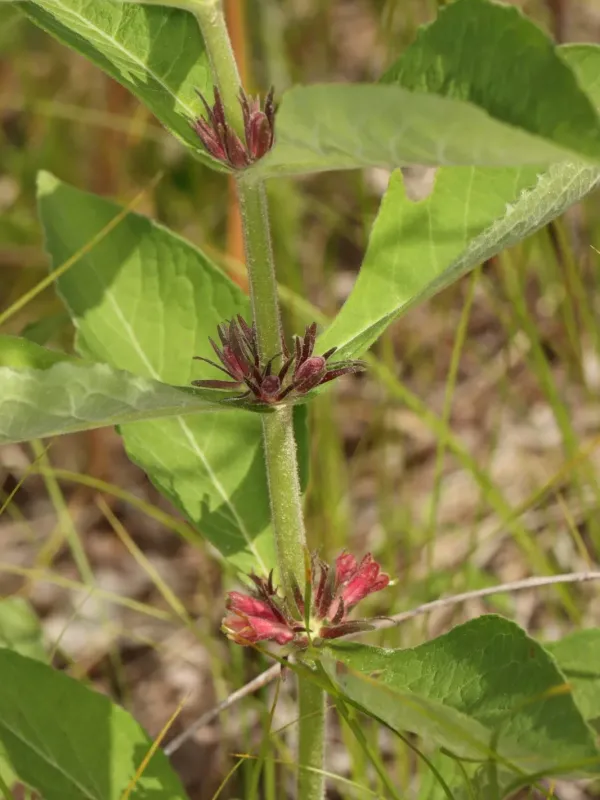
Description
How to tell it apart
Triosteum perfoliatum, commonly known as horse gentian or feverwort, is a perennial herbaceous plant belonging to the Caprifoliaceae family. It is distinctively characterized by its opposite leaves that are perfoliate, meaning the leaf bases wrap around and fuse through the stem.
The plant features a robust, fleshy root system that allows it to survive extreme conditions and regenerate rapidly. Its erect, hairy stems can grow up to a meter in height, supporting pairs of dark green, oval-shaped leaves.
Flowers are modest, appearing in the leaf axils, typically ranging in color from greenish-yellow to dull purple. These flowers develop into orange-red fleshy drupes that attract wildlife, aiding in seed dispersal across vast distances.
Seedlings emerge early in the spring, providing a head start over many annual crops. Once established, the plant spreads through both its persistent rhizomes and seeds, forming dense, competitive patches.
Its botanical structure and physiological durability make it a resilient species capable of thriving in varied habitats, from woodland margins to disturbed open fields.
Where it grows
Triosteum perfoliatum is typically found in moist, nutrient-rich soils near woodlands, forest clearings, and riparian zones. In an agricultural context, it readily invades field borders, drainage ditches, and fallow lands.
It prefers areas with high moisture availability, often colonizing low-lying sections of fields where water accumulates. These spots serve as reservoirs from which the weed expands into the main crop area.
Fencerows and adjacent uncultivated land are common sources of infestation, where seeds are deposited by birds and small mammals. Once these local populations reach a certain density, they begin to encroach upon neighboring arable land.
The weed demonstrates a high tolerance for varying light conditions, allowing it to survive both in open sun and under the partial shade of crop canopies or field edges.
Disturbed soil, such as that caused by heavy machinery or flooding events, creates the perfect seedbed for the plant, enabling rapid colonization of otherwise stable environments.
Harm it causes
The primary economic impact of Triosteum perfoliatum is its strong competition for water and soil nutrients, which significantly reduces the growth and productivity of primary crops. Yield losses in dense patches can be substantial.
The plant acts as an alternate host for several pathogens, potentially increasing the disease pressure on adjacent crops. This can lead to increased costs for fungicides and crop protection measures throughout the growing season.
Through allelopathic activity, the roots of the plant may release compounds into the soil that inhibit the germination and development of crop seedlings, giving the weed an added competitive advantage.
During harvest, the presence of the weed—particularly its fleshy fruits—can contaminate the harvested grain or produce, lowering its market value and necessitating costly cleaning and drying processes.
Because of its deep-seated root system, the weed survives shallow cultivation, making it a persistent nuisance that requires repeated interventions to manage successfully.
How to control
Effective management of Triosteum perfoliatum requires an integrated approach. Deep plowing can help disrupt the root system; however, it must be combined with subsequent mechanical or chemical treatments to prevent regrowth from remaining root fragments.
Systemic herbicides containing glyphosate are highly effective for post-harvest applications or on non-crop areas, as they kill the weed to the root, preventing further vegetative spread.
Focusing on the perimeter and field margins is critical. Eliminating the weed at its source—the nearby hedgerows and ditches—prevents the introduction of new seeds into the managed field.
Crop rotation with dense-canopy plants can help shade out new seedlings, restricting the ability of the weed to access sufficient light for rapid development during the early stages of growth.
Consistent monitoring and timely intervention during the active growth phase are essential. Removing individual plants before they set fruit is crucial to exhausting the seed bank and minimizing long-term spread.
Taxonomy
- Latin name
- Triosteum perfoliatum
- Family
- Жимолостные
- EPPO code
- TSEPE