
Sisyrinchium micranthum
Sisyrinchium micranthum
Description
How to tell it apart
Sisyrinchium micranthum is a small annual herbaceous plant belonging to the Iridaceae family. It features narrow, grass-like leaves clustered at the base, common to many species in this genus.
The stems are typically flattened and often winged, which serves as a key morphological characteristic for distinguishing it from other meadow grasses.
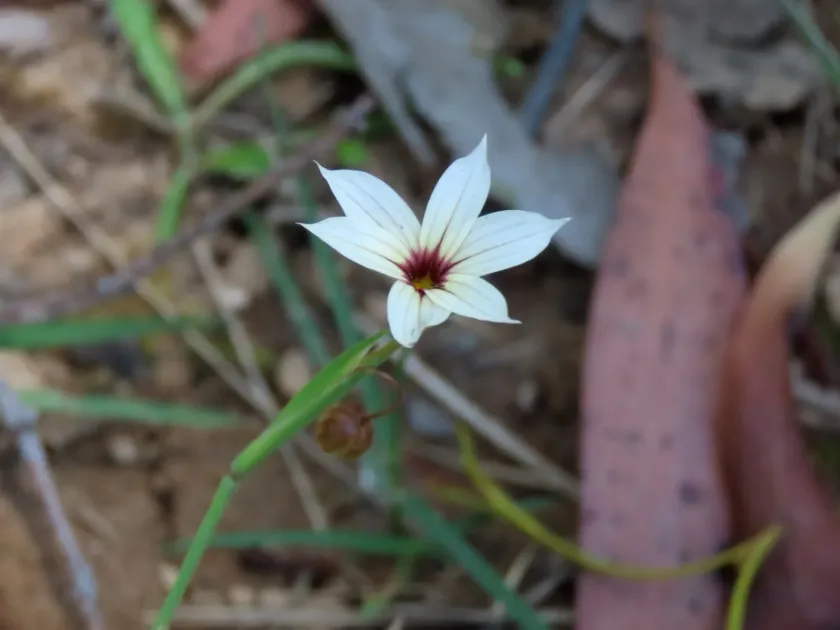
The flowers are relatively small, usually white or pale blue with a distinct yellow center, appearing in clusters protected by floral bracts.
It possesses a fibrous root system that allows for efficient uptake of nutrients, supporting its rapid growth during the spring and summer seasons.
The seeds are small, dark, and numerous, facilitating dispersal by wind and agricultural machinery across cultivated fields and pastures.
Where it grows
Native to Central and South America, Sisyrinchium micranthum has spread as an invasive weed to various temperate and subtropical regions globally.
It thrives in open, sunny environments with adequate moisture, commonly found in pastures, along roadsides, and in disturbed soil areas.
In agricultural systems, it acts as a weed in row crops and cereal fields, particularly where soil moisture levels are consistently high.
The species prefers sites with minimal canopy cover, allowing it to rapidly colonize fallow land or poorly managed crop edges.
It is frequently observed in irrigated fields, where its growth cycle is supported by artificial water supply, making it a persistent pest.
Harm it causes
The primary damage caused by Sisyrinchium micranthum is competition for essential resources, including water, nutrients, and sunlight, during the critical early stages of crop growth.
Its presence leads to reduced crop density and overall yield loss due to suppression of the desired vegetation and interference with crop establishment.
In forage crops, this weed reduces the quality of harvested hay, as it competes with nutritious grasses and complicates the drying and baling process.
The accumulation of a persistent seed bank in the soil creates long-term management challenges, requiring intensive monitoring over several seasons.
The weed complicates mechanical agricultural practices, requiring additional passes with implements and increasing the overall production costs.
How to control
Effective management relies on a integrated approach, starting with crop rotation to disrupt the life cycle and prevent the build-up of the seed bank.
Mechanical control, such as deep plowing and timely inter-row cultivation, is highly effective in destroying seedlings before they reach the reproductive phase.
Chemical control involves the application of selective herbicides during the active growth period, following strict label instructions to ensure crop safety.
Preventive measures include the use of clean, certified seeds and strict sanitation of farming equipment to prevent cross-contamination between fields.
- Deep tillage to bury seeds at lethal depths.
- Regular inter-row mechanical cultivation.
- Application of post-emergence herbicides.
- Sanitation of equipment to prevent seed dispersal.
Taxonomy
- Latin name
- Sisyrinchium micranthum
- Family
- Ирисовые
- EPPO code
- SISMI