
Rhizoclonium riparium
Rhizoclonium riparium
Description
How to tell it apart
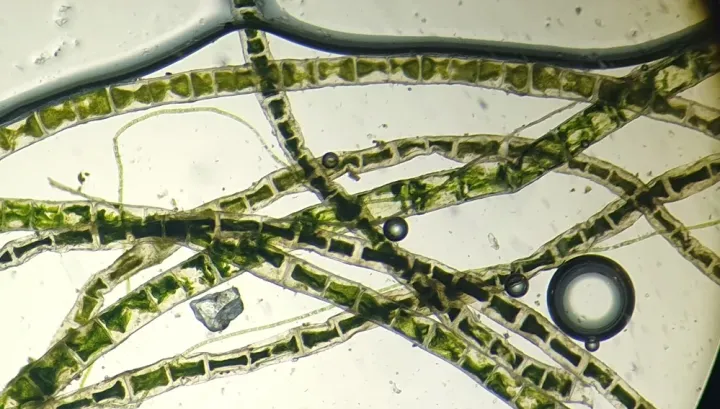
Rhizoclonium riparium is a filamentous green alga belonging to the Cladophoraceae family. It is characterized by thin, unbranched or sparsely branched filaments that form dense, hair-like mats of bright green to yellowish-green color.
The cells are cylindrical, containing a parietal reticulate chloroplast. Under a microscope, the structure shows long, slender filaments that are flexible and lack the complex branching seen in some related algal species.
This alga typically grows in colonies that appear as soft, woolly masses. It thrives by accumulating inorganic nutrients directly from the water column, supporting rapid vegetative expansion.
Reproduction is primarily vegetative through fragmentation. Small pieces of the filaments can break away, drift with the current, and establish new colonies in other parts of the water system.
When mass death of the colony occurs, the decomposing biomass releases a strong, pungent odor, serving as a clear indicator of a significant infestation within the water system.
Where it grows
This species is widely found in freshwater and brackish environments, including irrigation canals, drainage ditches, and flooded rice fields. It prefers still or slow-moving water conditions.
Rhizoclonium riparium is highly tolerant to high nutrient levels, particularly nitrates and phosphates. Its presence is a strong indicator of eutrophication caused by agricultural runoff.
It colonizes surfaces such as rocks, aquatic plants, and concrete structures of irrigation infrastructure. It can also form free-floating mats that blanket the water surface in stagnant areas.
The alga is well-adapted to warm, shallow water, making it a common nuisance in rice-growing regions during the early growing season when the water is well-lit and nutrient-rich.
Its resilience allows it to survive in damp mud during dry periods, which facilitates quick recovery once the irrigation systems are refilled with water.
Harm it causes
The primary impact of this alga is the obstruction of irrigation systems. Dense mats decrease the flow capacity of canals, causing water stagnation and poor distribution to crops.
In rice paddies, it competes directly with rice plants for essential nutrients, potentially limiting early development and resulting in reduced yield potential.
The surface mats create a physical barrier to sunlight, preventing the water column from heating up efficiently, which is detrimental to heat-loving crops like rice.
As large colonies die, the resulting decomposition consumes dissolved oxygen, creating hypoxic conditions that can damage the root systems of crops and disrupt the aquatic ecosystem balance.
Furthermore, the dense structure of the algal mats provides a refuge for various insects and pathogens that can subsequently attack the surrounding crop foliage.
How to control
Mechanical control is often the most direct approach, involving the manual or machine-assisted removal of algae from canals and water intakes to ensure proper water flow.
Chemical control utilizing approved algaecides is a common management strategy. Applications must be carefully timed to coincide with the early growth phase of the algae to maximize effectiveness.
Nutrient management is essential for long-term control. Reducing fertilizer runoff from adjacent fields into irrigation water significantly limits the resources available for algal proliferation.
Maintaining proper water circulation and regularly cleaning irrigation ditches can significantly discourage the establishment of Rhizoclonium colonies.
- Regular mechanical cleaning of canals.
- Improved field drainage practices.
- Application of copper-based algaecides.
Taxonomy
- Latin name
- Rhizoclonium riparium
- Family
- Кладофора
- EPPO code
- RHKRI