
Lewisiopsis tweedyi
Lewisiopsis tweedyi
Description
How to tell it apart
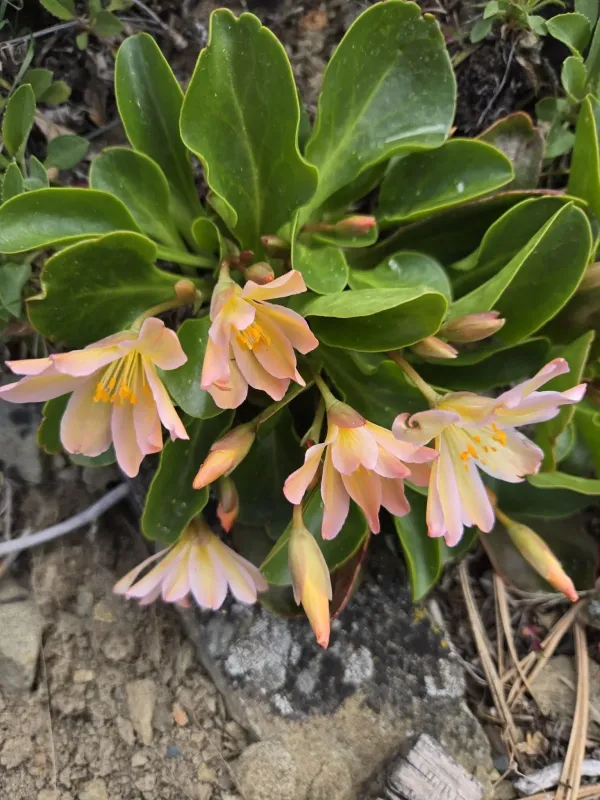
Lewisiopsis tweedyi, formerly classified as Lewisia tweedyi, belongs to the Montiaceae family. It is a perennial herbaceous plant recognized by its strong caudex and thickened, fleshy roots adapted for survival.
The plant features a basal rosette of large, leathery, oval-shaped leaves. These leaves have a deep green appearance and a waxy surface, contributing to the plant's high resistance to environmental stress.
Its flowers are solitary and large, typically displaying vibrant shades of salmon-pink or cream with a silky texture, which can often disguise its nature as a field weed.
The root system is extensive and deep, allowing the plant to recover rapidly even after the above-ground portion is removed or damaged by light tillage.
As a resilient perennial, it possesses a high degree of biological adaptability, allowing it to survive in varied soil conditions and successfully compete with standard agricultural crops.
Where it grows
Naturally, Lewisiopsis tweedyi is found in subalpine regions of western North America. In agricultural settings, it typically invades fields located near mountainous or high-elevation areas.
It favors loose, well-drained soils and can often become established in fallow fields where consistent soil management has been neglected for several seasons.
The plant spreads primarily through seeds dispersed by wind or machinery, making farm equipment cleaning a vital part of field sanitation.
Due to its hardy nature, it can persist through harsh winters, gaining a head start over seasonal crops once spring conditions arrive.
It is most frequently identified in plots with poor crop rotation or where reduced tillage methods have allowed perennial weeds to anchor themselves deep within the soil profile.
Harm it causes
The primary harm caused by Lewisiopsis tweedyi is the intense competition for soil moisture and vital mineral nutrients, which can severely stunt the growth of nearby crops.
By forming dense rosettes, the weed creates significant shading, which reduces the photosynthetic capacity of young crop plants in the early stages of development.
The presence of this weed in pasture lands is detrimental because it is often unpalatable to livestock, potentially reducing the nutritional quality of the forage.
The weed's thick roots can interfere with soil structure and complicate mechanical harvesting, potentially damaging equipment or causing excessive harvest loss.
Its ability to accumulate biomass in the lower canopy layer increases humidity, creating favorable conditions for secondary fungal infections in the main crop.
How to control
Effective control strategies start with deep autumn plowing, which helps to expose the root systems to frost or desiccation, thereby reducing the plant's ability to regenerate.
Crop rotation remains a fundamental practice, as alternating between broad-leaf and cereal crops helps break the weed's development cycle.
Chemical control requires the application of systemic herbicides targeted at the rosette stage to ensure the active ingredients reach the deep-seated root structure.
Preventative measures, such as thorough cleaning of tractors and combines, are essential to stop the spread of seeds between different fields.
- Implement deep tillage to disturb established root systems.
- Utilize systemic herbicides during the active growing phase.
- Maintain strict field hygiene and machinery sanitation protocols.
Taxonomy
- Latin name
- Lewisiopsis tweedyi
- Family
- Монтиевые
- EPPO code
- LWITW