
Lachnanthes caroliniana
Lachnanthes caroliniana
Description
How to tell it apart
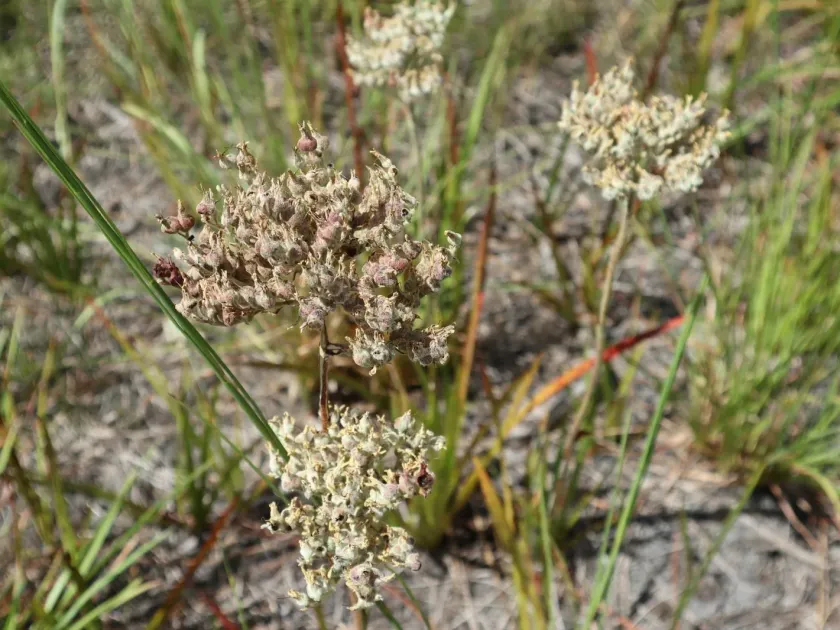
Lachnanthes caroliniana, commonly known as redroot or bloodroot, is a perennial herbaceous plant belonging to the Haemodoraceae family. It is easily identified by its bright red rhizomes and fibrous roots.
The plant features a basal rosette of sword-shaped leaves and a central stem that can grow up to one meter in height, covered in fine, hair-like structures that give it a distinctive texture.
During the flowering stage, it produces dense clusters of yellow flowers with hairy petals. The plant is primarily characterized by its robust vegetative growth and the ability to spread via underground rhizome systems.
As a weed, it is classified as a persistent perennial. Because its rhizomes can survive in the soil even after standard cultivation, it is highly resilient and difficult to eradicate once it establishes a foothold.
The biological cycle is dominated by the rapid expansion of underground parts, which act as energy storage units, allowing the plant to survive adverse conditions and regrow vigorously during the growing season.
Where it grows
The native habitat of Lachnanthes caroliniana includes moist areas, wetlands, and bogs, primarily found in the eastern regions of North America. It thrives in soils with high water content.
In agricultural settings, it is a common nuisance in fields with poor drainage or organic peat soils. These environments provide the exact conditions the plant needs to expand its root network rapidly.
The species shows a high tolerance for acidic soil conditions, often invading areas where other competing weeds or crops may struggle, giving it a significant competitive advantage.
It frequently colonizes field edges, irrigation ditches, and low-lying zones, acting as a source for further spread into the main crop rows through seeds and displaced root fragments.
Its ability to withstand temporary flooding makes it particularly problematic in agricultural lands that are subjected to seasonal heavy rains or inefficient water management strategies.
Harm it causes
The weed causes significant harm by forming dense clumps that outcompete crops for sunlight, nutrients, and space. This competition directly results in lower yields for corn, grains, and vegetable crops.
Its intensive root system depletes soil moisture and essential minerals faster than many annual weeds, effectively starving the surrounding crop plants in nutrient-deficient soils.
Due to the presence of specific chemical compounds, the plant can be toxic to livestock if ingested in large quantities, posing a risk when the weed is harvested along with hay or silage.
The presence of large rhizome networks creates mechanical obstacles during tillage and harvesting, frequently causing equipment clogging and increasing the operational costs for farmers.
Furthermore, it acts as an alternative host for various agricultural pests and pathogens, maintaining their presence in the field even after the primary crops have been harvested or treated.
How to control
Effective management of Lachnanthes caroliniana requires an integrated approach that combines soil cultivation techniques with precise herbicide application to weaken the rhizome mass.
Deep plowing remains one of the most effective mechanical methods to expose rhizomes to air and sun, leading to desiccation and preventing the plant from re-establishing itself.
- Repeated disking to break up and weaken the underground rhizome structures.
- Implementation of crop rotations that utilize dense-canopy crops to shade out the weed.
- Frequent mowing or harvesting before the plant reaches the seed-set stage.
- Improving overall field drainage to make the environment less favorable for the weed.
Chemical control usually involves the application of systemic herbicides. Because the plant is perennial, applying these during the phase of active nutrient translocation to the roots is crucial.
Farmers should focus on localized spot-treatment programs for heavy infestations, ensuring that the entire root system is impacted to prevent the common issue of regrowth from remaining fragments.
Taxonomy
- Latin name
- Lachnanthes caroliniana
- Family
- Гемодоровые
- EPPO code
- LAHTI