
Couch grass
Elytrigia repens
Description
How to tell it apart
Couch grass is a perennial rhizomatous grass belonging to the Poaceae family. It features upright, smooth stems that can grow anywhere from 40 cm to 150 cm in height.
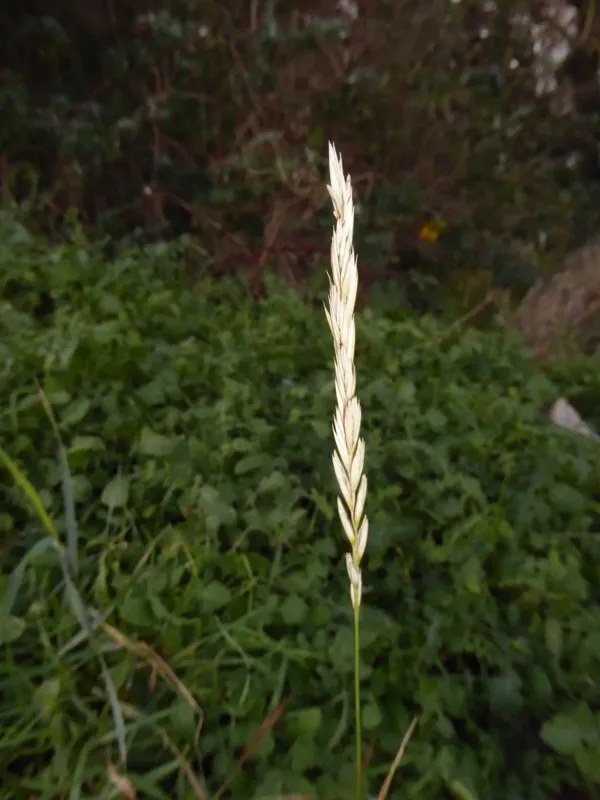
The leaves are flat, linear, and dark green, often with a rough texture. The inflorescence is a slender, flat spike that closely resembles a wheat ear, making it easily recognizable.
The most distinctive characteristic is the white, creeping rhizome system that spreads rapidly underground, allowing the plant to form dense mats that exclude other vegetation.
It propagates primarily through these rhizomes, where even a small piece left in the soil can sprout into a new plant, making manual removal extremely difficult.
The plant is highly adaptable and can grow in various environments, from fertile agricultural fields to compacted roadsides, showing remarkable resilience to environmental stress.
Where it grows
Couch grass is found worldwide in agricultural fields, pastures, gardens, and along fence lines. It is a major problem in cereals, row crops, and vegetable production areas.
It competes aggressively with crops for water, nutrients, and sunlight, often resulting in significant yield losses due to the extreme density of its root network.
In fields, the weed creates significant soil moisture deficits, as its roots penetrate much deeper than many short-rooted vegetable varieties, depriving them of vital resources.
Beyond competition, Couch grass serves as a host for various cereal diseases, including rust and ergot, which can easily spread to nearby sensitive crops.
Its presence significantly interferes with harvest operations, as the thick rhizomes and stalks can jam machinery and increase the moisture content of harvested grain.
How to control
Mechanical control focuses on cultivation techniques that pull rhizomes to the surface to dry them out, such as disc harrowing or deep plowing during dry weather conditions.
Cultural methods include the use of competitive cover crops or crop rotation strategies that suppress weed growth by shading or rapidly occupying the available space.
Chemical control is often necessary, utilizing systemic herbicides like glyphosate, which are translocated to the rhizomes and effectively kill the plant from within.
In broad-leaved crops, selective graminicides are used to target the couch grass without damaging the main crop, providing a flexible solution for modern farm management.
- Systemic herbicide application after harvest.
- Mechanical cultivation to exhaust rhizome energy.
- Competitive crop selection in rotations.
- Maintaining soil fertility to support crop vigor.
Taxonomy
- Latin name
- Elytrigia repens
- Family
- Многолетние злаковые