
Dendrobium odoratum
Dendrobium odoratum
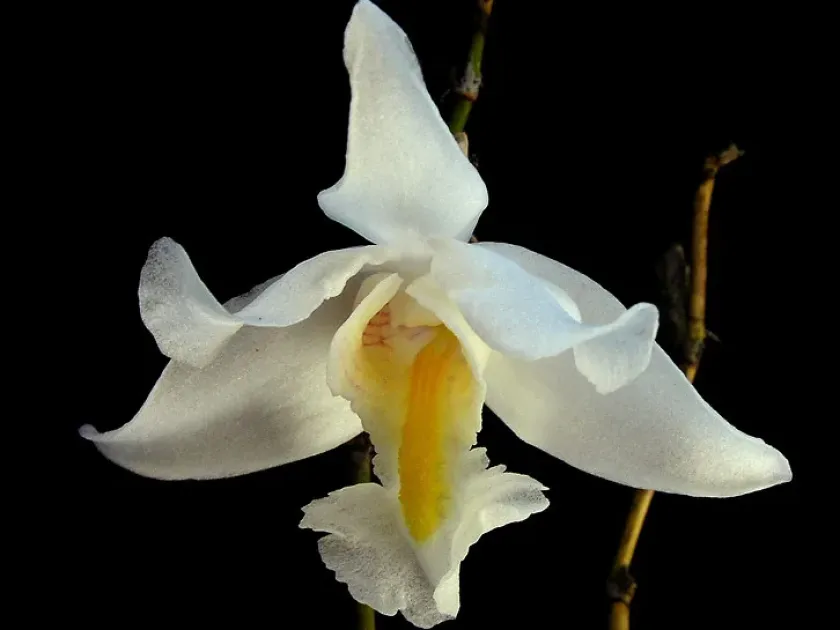
Description
How to tell it apart
Dendrobium odoratum belongs to the Orchidaceae family, but in an agricultural context, it is treated as an invasive weed species.
The plant is characterized by a sympodial growth pattern, forming dense clumps with thickened stems known as pseudobulbs.
Its leaves are lanceolate, leathery, and arranged alternately on the stem, which provides high resistance to adverse environmental conditions.
The root system is robust, often epiphytic or lithophytic, allowing it to anchor itself firmly on various substrates, including tree bark or rocky surfaces.
The flowers grow in drooping racemes and possess a distinct, strong fragrance, which aids in wide dispersal of pollen and seeds.
Where it grows
This species is native to tropical and subtropical forests but can become a weed in protected agricultural environments like greenhouses.
It is frequently found in the vicinity of nurseries and ornamental gardens, where it competes with crops for space and nutrients.
The plant thrives in high-humidity areas with partial shade, enabling it to colonize greenhouse spaces rapidly if not managed properly.
In warm climates, it may spread into field crops, suppressing the growth of young seedlings through aggressive competition.
Its biological adaptability allows it to survive significant temperature fluctuations, complicating efforts to eradicate it from agricultural sites.
Harm it causes
The primary damage caused by this plant is the formation of dense thickets that physically obstruct the growth of valuable agricultural crops.
The weed absorbs moisture and nutrients efficiently, causing water stress and nutrient deficiency in surrounding commercial crops.
Dendrobium odoratum acts as a host for various pests and pathogens, which can easily migrate to vulnerable crop species in a nursery setting.
The presence of this weed reduces the overall efficiency of agricultural operations and complicates routine manual labor in crop fields.
Its rapid vegetative reproduction allows it to occupy productive land quickly, necessitating urgent intervention by professional agronomists.
How to control
The primary method of control is agro-technical, involving thorough substrate cleaning and the sanitation of unwanted plant material.
Strict disinfection of tools, containers, and irrigation systems is essential to prevent the spread of seeds or plant fragments.
Chemical control involving systemic herbicides may be employed, though it must be done with extreme caution to avoid damaging target crops.
- Manual removal of mature specimens including the root system.
- Managing greenhouse humidity levels to create unfavorable conditions.
- Spot application of herbicides in areas with high weed density.
Maintaining high levels of greenhouse hygiene is critical to prevent the introduction of seeds through air currents or contaminated water supplies.
Regular monitoring of cultivation areas during the early growing season allows for the identification and removal of weeds before they reach maturity.
Taxonomy
- Latin name
- Dendrobium odoratum
- Family
- Орхидные
- EPPO code
- DENOD