
Rigid hornwort
Ceratophyllum demersum
Description
How to tell it apart
Rigid hornwort belongs to the Ceratophyllaceae family. It is a submersed aquatic plant that lacks true roots, relying on specialized structures to remain anchored.
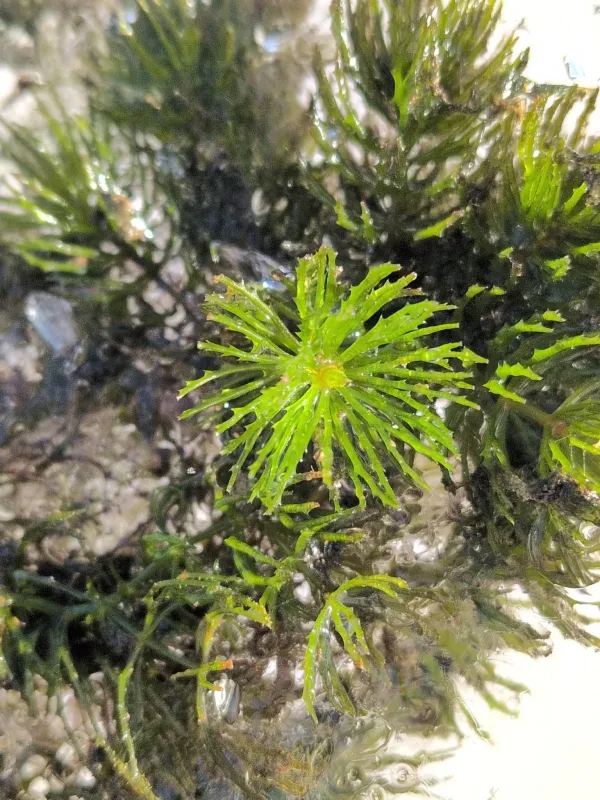
The plant features stiff, brittle stems that are densely covered with dark green, forked leaves arranged in whorls along the stem.
Unlike most plants, it uses modified white shoots called rhizoids to fix itself into the substrate at the bottom of water bodies.
Its fragile nature means that even small pieces of the stem can break off and form new, independent plant colonies.
The flowers are very small and develop underwater, followed by spiny nut-like fruits that can easily attach to the feathers of migratory birds.
Where it grows
This species is found worldwide in a variety of environments, including ponds, lakes, and slow-moving rivers or streams.
In agricultural settings, it is a significant weed in irrigation canals, drainage ditches, and managed wetlands such as rice paddies.
It thrives in nutrient-rich water, often benefiting from agricultural runoff containing excess nitrogen and phosphorus from fertilizers.
The plant is highly adaptable and can grow in various light conditions, allowing it to colonize both shallow and deeper parts of water channels.
Once established, it often forms dense, monoculture mats that can completely fill the water column, displacing native aquatic vegetation.
Harm it causes
The primary concern is the reduction of water flow in irrigation and drainage systems, which directly impacts the efficiency of crop watering.
Accumulation of hornwort biomass can clog water pumps, filters, and intake pipes, causing frequent failures and requiring expensive maintenance.
In rice cultivation, the weed competes for vital nutrients and light, which leads to reduced crop density and overall lower harvest yields.
Excessive decay of the plant material creates anaerobic conditions in the water, which can release toxins and degrade the water quality for agricultural use.
The thick mats create an environment that harbors pests and disease vectors, potentially affecting the health of nearby agricultural ecosystems.
How to control
Mechanical control, such as dredging or using aquatic weed cutters, is the most common method to clear canals and maintain water throughput.
Draining and drying canals during the off-season is highly effective at killing the plants through desiccation and winter freezing.
Chemical control can be implemented using specific aquatic-approved herbicides, though usage must be carefully managed to prevent environmental contamination.
Reducing nutrient loading by improving field drainage and fertilizer application practices helps limit the explosive growth of the weed.
Integrated water management that combines mechanical harvesting with water level regulation remains the most effective strategy for population control.
Taxonomy
- Latin name
- Ceratophyllum demersum
- Family
- Роголистник
- EPPO code
- CEYDE