
Water Hawthorn
Aponogeton distachyos
Description
How to tell it apart
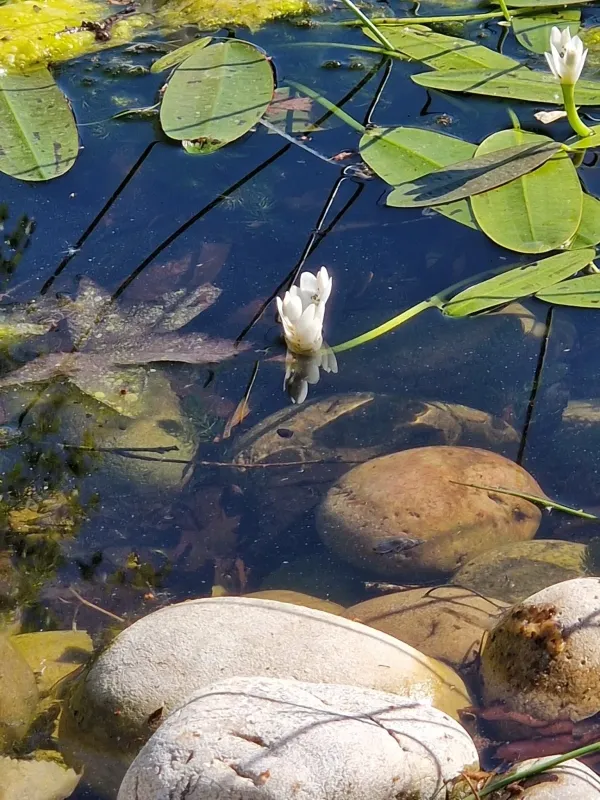
The water hawthorn is an aquatic perennial plant belonging to the Aponogetonaceae family. It is easily identified by its oblong, dark-green floating leaves, often featuring irregular dark spots.
The most distinctive characteristic is its inflorescence, which consists of a bifurcated (forked) spike that rises above the water surface. The flowers are white and possess a pleasant vanilla-like scent.
The plant features a robust, tuberous rootstock that anchors firmly into the sediment of the water body. It displays strong vegetative vigor under various temperate conditions.
Propagation occurs through seeds dispersed by water flow and through the fragmentation of rhizomes, allowing it to colonize new areas rapidly.
Although it resembles some water lily species, its unique spike structure and venation pattern are reliable indicators for accurate botanical identification.
Where it grows
Water hawthorn favors stagnant or slow-moving water bodies such as ponds, irrigation ditches, and slow streams. It is particularly problematic in human-made water systems.
It is frequently encountered in agricultural regions, where it colonizes irrigation channels, causing significant disruption to water management infrastructure.
The plant adapts well to various substrates, including silt and sand, which facilitates its spread in man-made reservoirs and drainage networks.
It is widely distributed in temperate and subtropical climates where water bodies do not freeze to the bottom, allowing for year-round survival.
The presence of excess nutrients in runoff from fields often acts as a catalyst for the excessive growth of this species in irrigation ponds.
Harm it causes
The primary damage caused by water hawthorn is the blockage of irrigation networks, which reduces flow velocity and compromises the overall efficiency of crop watering systems.
In aquaculture, dense mats of the plant can cause nighttime oxygen depletion, leading to significant stress or mortality in fish populations.
The weed interferes with maintenance operations, fouling machinery, pump filters, and water intake structures, leading to increased operational costs.
By outcompeting native aquatic flora, the plant disrupts local ecosystems and decreases the overall biodiversity of the infested water body.
The accumulation and subsequent decomposition of large quantities of biomass lead to water quality degradation, affecting downstream irrigation supply.
How to control
Mechanical control includes the regular removal of plant biomass using rakes, aquatic weed harvesters, or dredgers during the peak growing season.
Water level management, such as controlled drying of irrigation canals, is highly effective, as the rhizomes are sensitive to desiccation.
Chemical control involves the use of specific aquatic-approved herbicides, applied with strict adherence to label directions to protect aquatic life.
Biological control methods include stocking herbivorous fish species that feed on young shoots, which can help manage density in closed water systems.
Integrated management plans require consistent monitoring of water bodies to ensure early intervention before the plant establishes dense, difficult-to-manage colonies.
Taxonomy
- Latin name
- Aponogeton distachyos
- Family
- Апоногетон
- EPPO code
- APGDI