
Marimo
Aegagropila linnaei
Description
How to tell it apart
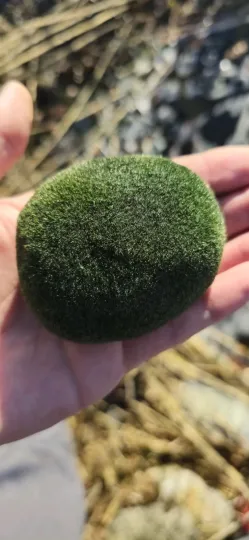
Aegagropila linnaei, commonly known as Marimo, is a species of green algae belonging to the Cladophoraceae family, famous for its unique spherical growth.
It forms dense, velvety green balls composed of highly branched algal filaments that grow outward from the center, maintaining a rounded shape due to water current.
This species is highly resilient and can survive in low-light environments, making it a persistent organism in stagnant or slow-moving water bodies.
The morphology consists of fine threads that weave together; when disturbed or broken, the fragments are capable of independent growth and colonization.
Despite its ornamental reputation, in agricultural environments, it is considered a weed due to its ability to form extensive, suffocating mats on the substrate.
Where it grows
Marimo typically inhabits freshwater environments, including lakes and ponds where stable, cool bottom temperatures are present throughout the year.
In the context of agriculture, it often thrives in irrigation channels and aquaculture ponds that suffer from high nutrient runoff, particularly phosphates and nitrates.
The weed prefers solid substrates like rocks or sandy bottoms where it can settle and expand, eventually covering the entire floor of a shallow water body.
It is frequently found in irrigation systems where water movement is slow enough to prevent displacement but sufficient to distribute nutrients across the canal.
The organism is adaptable to various ecosystems and can survive in disturbed water systems where typical native flora has been outcompeted.
Harm it causes
The primary damage caused by Marimo is the suppression of submerged native plant species by shading, which prevents photosynthesis and stunts their growth.
During the night, large colonies of this algae consume significant amounts of oxygen, leading to hypoxic conditions that jeopardize fish and other aquatic life.
In farming infrastructure, the algae clog water intake valves, drainage pipes, and filtration screens, leading to mechanical failure and increased maintenance costs.
Decomposing biomass releases nutrients back into the water, potentially triggering further algal blooms and leading to the overall degradation of water quality.
Its persistent nature and rapid regrowth after mechanical disturbance make it an expensive and labor-intensive problem to manage in agricultural settings.
How to control
Mechanical removal through regular dredging and netting is the most effective way to manage population density in irrigation ditches and commercial ponds.
Preventative agricultural measures focus on buffering water sources to stop nutrient-rich runoff from fields, which is the main driver of unwanted algal growth.
Chemical control involving algaecides should be handled with caution, as non-selective treatments can have severe toxic effects on the surrounding environment.
Integration of biological control, such as introducing herbivorous fish species, can help manage algae populations without relying on synthetic chemicals.
- Periodic sediment removal to eliminate spores and vegetative fragments.
- Water quality monitoring to maintain nutrient levels below the threshold for bloom formation.
- Drying out irrigation canals during the off-season to dehydrate the algae.
Taxonomy
- Latin name
- Aegagropila linnaei
- Family
- Пифофоровые
- EPPO code
- CDPAE