
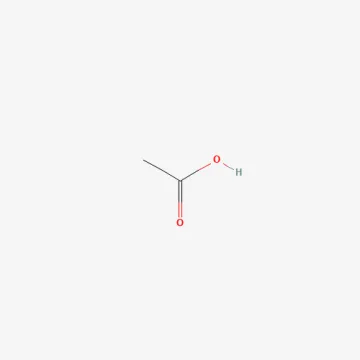
Acetic acid
Description
Mode of action
Acetic acid acts as a non-selective contact herbicide in agricultural settings. It does not possess systemic properties, meaning it does not translocate within the plant vascular system to the roots.
The primary mechanism of action involves the rapid dehydration of plant tissues. Upon contact, the acid dissolves the protective epicuticular wax layer and ruptures cell membranes.
Once the cellular structure is compromised, the internal fluids escape, causing the treated green parts of the plant to wither and necrotic spots to appear within minutes to a few hours.
Acetic acid provides rapid burndown of weed foliage, but because it does not affect the root system, it is most effective on young, annual plants that lack established energy reserves.
In the soil environment, acetic acid is readily biodegradable. It is broken down by native soil microorganisms into carbon dioxide and water, leaving minimal long-term residues compared to synthetic chemicals.
What it targets
This substance is effective against a wide range of annual broadleaf weeds and grasses, particularly those in the seedling or juvenile stages of development.
It is commonly utilized for vegetation control on non-crop sites, such as walkways, fence lines, and paths, where total control of existing foliage is desired without soil sterilization.
Beyond its herbicidal use, acetic acid acts as a disinfectant for agricultural equipment, storage containers, and greenhouse structures, helping to manage superficial fungal or bacterial pathogens.
It can also be employed as a desiccant for certain crops to dry out unwanted foliage before harvest, facilitating easier mechanical collection.
Users must be careful as the acid is highly phytotoxic to all green plant tissue, and non-target damage can occur if the solution drifts onto crops or desirable garden plants.
Rates and timing
For effective weed control, solution concentrations typically range between 10% and 20% acetic acid. Lower concentrations often fail to produce a lethal effect on established seedlings.
High spray volumes are necessary to ensure complete coverage of the foliage, as the contact nature of the herbicide means that untreated leaf areas will continue to grow normally.
Application is most effective during periods of high solar radiation and low humidity, as these conditions accelerate the water loss and drying process in the treated weeds.
Treatment should be applied early in the day, ensuring that there is no morning dew present on the leaves, which could dilute the herbicide to ineffective concentrations.
Follow-up applications are often required to control successive flushes of germinating weeds, especially since the acid provides no residual or pre-emergent control.
Restrictions
Acetic acid is corrosive to many metals, including iron and steel. Equipment used for application must be made of plastic, stainless steel, or other acid-resistant materials to prevent degradation.
Proper personal protective equipment (PPE), including chemical-resistant gloves, goggles, and respiratory protection, is mandatory to prevent skin and eye irritation from splashes or fumes.
Do not mix acetic acid with alkaline pesticides, as the resulting chemical reaction will neutralize the effectiveness of the solution and could release heat or gases.
Storage must be in a cool, well-ventilated area in chemically inert containers, kept securely away from sources of ignition, strong oxidizers, and incompatible materials.
Care must be taken to manage the drift during application, as the product is highly non-selective and will damage any cultivated plant it contacts directly.
Status in the European Union
Approved in the EU
- CAS number
- 64-19-7
- Approved from
- 01.07.2015
- ADI
- Not appl.
- ARfD
- Not appl.
- AOEL
- Not appl.
EU status is for reference only and does not replace national registration in your country.