

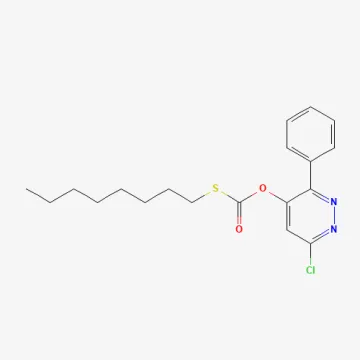
Description
Mode of action
Pyridate belongs to the phenylpyridazine chemical class and acts as a highly selective contact-action herbicide.
The mechanism of action of the substance is based on the inhibition of photosynthesis in weeds, specifically blocking electron transport in photosystem II.
The preparation penetrates weeds mainly through the leaves, so a key factor for efficiency is the uniform coverage of the leaf blade with the working solution.
In the plant, pyridate does not move systemically, which ensures high selectivity and safety for crop plants capable of quickly metabolizing the substance.
Complete weed death after treatment usually occurs within a few days, while visual symptoms of chlorosis are noticeable within 24–48 hours.
What it targets
The substance effectively controls a wide spectrum of annual broad-leaved weeds, including species resistant to other herbicides.
Pyridate is particularly important in controlling difficult weeds in corn, rapeseed, and other crop fields.
- Chenopodium album
- Amaranthus retroflexus
- Solanum nigrum
- Polygonum species
- Datura stramonium
Pyridate is often used in tank mixtures to broaden the spectrum of action against stubborn weed species.
Due to its selectivity, the preparation allows for effective weed cleaning in fields without significant stress to the main crop.
Rates and timing
Application rates of pyridate vary depending on the weed species composition, their growth stage, and the specific crop being treated.
The optimal time for application is considered to be the early leaf stage of weeds when they are most sensitive to the contact effect of the preparation.
When used in tank mixtures, application rates may be adjusted to optimize the synergistic effect between the components.
It is important to monitor water quality and the pH level of the working solution, as this directly affects the stability of pyridate and its absorption by weeds.
Agronomists are advised to perform treatments at air temperatures no lower than 10–12 degrees Celsius to achieve maximum biological efficiency.
Restrictions
It is not recommended to spray if crop plants are under stress due to drought, frost, or pest damage.
Pyridate exhibits minimal soil activity, so it does not control subsequent "waves" of weeds, which must be considered when planning crop protection.
When working with the preparation, it is necessary to strictly follow regulations regarding solution preparation and the use of personal protective equipment.
Drift of the working solution to neighboring fields with sensitive agricultural or ornamental crops is not permitted.
Storage of the preparation must be carried out in the original packaging in a cool, dry, and inaccessible place, in accordance with safety rules.
Regulatory
Status in the European Union
Approved in the EU
- CAS number
- 55512-33-9
- Approved from
- 01.01.2016
- Approval until
- 31.12.2030
- ADI
- 0.036 mg/kg bw/day
- ARfD
- 0.4 mg/kg bw
- AOEL
- 0.036 mg/kg bw/day
Hazard classification (CLP)
Aquatic Acute 1 - H400Aquatic Chronic 1 - H410Skin Irrit. 2 - H315Skin Sens. 1 - H317
EU legislation
EU status is for reference only and does not replace national registration in your country.
Content graph
Connections · Pyridate
Most often together:
Marketplace
Products · 4


