
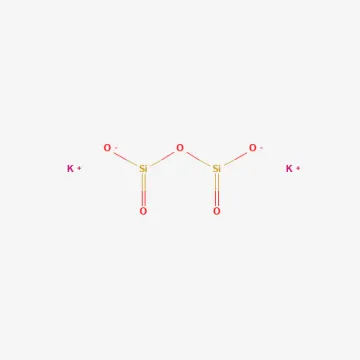
Potassium silicate
Description
Mode of action
Potassium silicate is an inorganic compound widely used in agriculture as a contact fungicide and plant biostimulant. Its efficacy is primarily based on reinforcing plant structure and altering the surface chemistry of foliage.
Upon application, the compound forms a physical barrier on the leaf surface, which acts as a deterrent against fungal spore germination. Silicon, a key component, is integrated into the epidermal cell walls, increasing their mechanical strength and resistance to pathogen-secreted enzymes.
The substance also functions by creating an alkaline environment on the leaf surface. This elevated pH level inhibits the development of most fungal pathogens, effectively acting as a deterrent to infection spread.
In addition to its protective role, potassium silicate serves as a source of soluble potassium, which is essential for plant physiological processes, including water regulation and nutrient transport throughout the plant tissues.
Plants treated with potassium silicate show improved structural integrity and better resistance to abiotic stressors such as drought and extreme temperatures, promoting overall crop health.
What it targets
Potassium silicate is most commonly employed for the prevention and control of powdery mildew across various horticultural and agronomic crops. It is particularly valued in greenhouse environments.
- Powdery mildew on vegetables, fruits, and ornamental plants.
- Suppression of gray mold in prophylactic spray programs.
- Reduction in pest damage, such as mites and thrips, due to cell wall hardening.
- Enhancement of systemic resistance against various fungal diseases.
It is widely used on crops like cucumbers, grapes, and roses, where powdery mildew outbreaks are frequently difficult to control using traditional methods alone.
By strengthening the plant epidermis, it helps in maintaining the quality of harvested fruits and vegetables, extending their shelf life and reducing susceptibility to post-harvest decay.
Furthermore, it contributes to an Integrated Pest Management (IPM) approach by providing a non-toxic alternative to synthetic fungicides in early disease management stages.
Rates and timing
Application rates for potassium silicate must be carefully calculated, as the product is highly alkaline and improper concentrations can lead to foliage burning or phytotoxicity.
A standard working concentration ranges from 0.5% to 1.0%. It is advisable to begin prophylactic treatments early in the season before visible symptoms of disease appear.
Applications should be repeated at intervals of 7 to 14 days, depending on the severity of the disease pressure and the specific environmental conditions of the growing area.
Thorough coverage of all leaf surfaces is crucial, particularly the undersides of leaves, to ensure that the protective barrier is continuous and effective against pathogens.
Optimal application timing is during early morning or late evening, as this allows the solution to dry slowly, ensuring better penetration and adherence to the plant surface.
Restrictions
The primary limitation of potassium silicate is its poor compatibility with acidic pesticides and most fertilizers, which causes precipitation and loss of chemical stability.
Mixing potassium silicate with copper-based products or micronutrients in chelated form is generally not recommended unless specified by the manufacturer, to avoid chemical degradation.
Safety precautions are mandatory; handlers should wear appropriate protective gear, including gloves and goggles, as the concentrated solution can irritate skin and eyes.
Storage should occur in tightly sealed containers in a cool, dry place. Exposure to air can cause the product to absorb moisture and carbon dioxide, leading to unwanted crystallization.
Avoiding application during high-temperature periods is critical to prevent leaf burn, as the combination of sunlight, heat, and alkalinity can severely stress the plant tissues.
Status in the European Union
Not approved in the EU
- CAS number
- See note
EU status is for reference only and does not replace national registration in your country.