
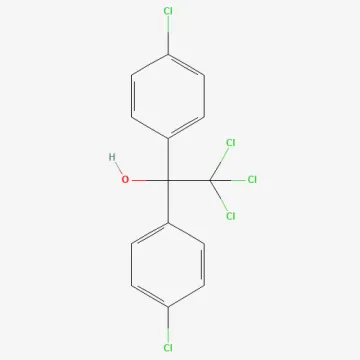
Dicofol
Description
Mode of action
Dicofol is a chemical compound belonging to the class of organochlorine acaricides. The substance exhibits mainly contact action, meaning it requires direct contact with the pest or the treated plant surface to be effective.
The mechanism of biological activity is based on the disruption of oxidative phosphorylation in the mitochondria of target organisms. This leads to the blockage of cellular respiration and the subsequent death of insects and mites.
The active ingredient demonstrates high efficacy in controlling mobile stages of mites, however, it has weak ovicidal activity, meaning it has a minimal effect on the eggs of pests.
The product is characterized by a long protective period, which allows for controlling pest population levels for several weeks after a single spraying application.
Due to its chemical nature, dicofol is a non-systemic compound, therefore it does not penetrate deep into plant tissues and does not possess pronounced systemic mobility within the plant's conductive system.
What it targets
The main purpose of dicofol is the eradication of a wide spectrum of phytophagous mites, belonging to the spider mite, fruit mite, and gall mite families.
The product is widely used to protect fruit crops, such as apples, pears, peaches, and grapes, from damage caused by the active feeding of various mite species.
Dicofol is also effective in vegetable and melon cultivation, where it is used to suppress outbreaks of spider mite reproduction during dry periods.
In ornamental horticulture, the substance is applied to protect floral crops in open ground from infestation by microscopic pests that can significantly reduce the marketable quality of the products.
The product is recommended for use within integrated pest management programs as an effective component against resistant mite populations that have developed tolerance to organophosphate pesticides.
Rates and timing
The application rates of the product depend directly on the specific crop, the degree of pest infestation, and the growth stage of the vegetation, which requires high-quality coverage with the solution.
Usually, working solutions are prepared based on an active ingredient concentration that ensures complete wetting of the leaf surface, as the contact nature of the action requires thorough spraying.
The timing of applications is linked to the period of peak mite feeding activity, which requires constant monitoring of plant health and counting the number of individuals per leaf.
An important factor when using dicofol is the temperature regime: the effectiveness of the product often increases at moderately high temperatures typical for peak pest activity.
- Apply during morning or evening hours.
- Avoid spraying during active bee flight periods.
- Follow regulated intervals between treatments to prevent residue accumulation.
Restrictions
The use of dicofol is strictly limited by current environmental legislation because this substance is characterized by high persistence in the environment.
Applying the product in water protection zones and near fishery water bodies is prohibited due to its marked toxicity to aquatic fauna and its potential for accumulation in bottom sediments.
When working with dicofol, it is necessary to use personal protective equipment for the skin, respiratory tract, and eyes, as the compound can penetrate the human body if safety procedures are not followed.
There are strict requirements for pre-harvest intervals: treated produce must not be consumed for a specific number of days following the last application.
Considering the potential for pest resistance development, it is recommended to alternate dicofol with acaricides of other chemical classes to prevent a decrease in the biological effectiveness of treatments.
Status in the European Union
Not approved in the EU
- CAS number
- 115-32-2
EU status is for reference only and does not replace national registration in your country.