
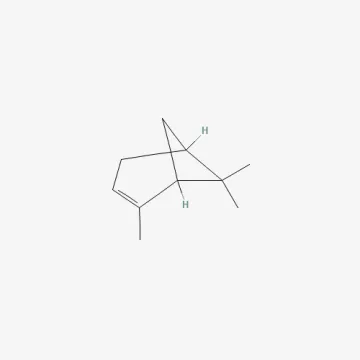
Alpha-pinene
Description
Mode of action
Alpha-pinene is a bicyclic monoterpene, primarily derived from coniferous resins, which serves as a highly effective functional component in agrochemical formulations.
This substance acts as an adjuvant, significantly improving the physical and chemical properties of pesticide spray solutions applied to crops.
Its mechanism of action involves reducing the surface tension of droplets, ensuring better spreading across the leaf surface and deeper penetration through the cuticle layer.
Due to its lipophilic nature, alpha-pinene promotes the retention of active ingredients on the plant surface, preventing them from being washed away by rainfall or dew.
Furthermore, this compound possesses natural repellent properties that may temporarily deter certain pests, thereby enhancing the overall protective efficacy of the product.
What it targets
The primary purpose of alpha-pinene is to increase the biological efficiency of herbicides, insecticides, and fungicides across a wide range of crops.
It is successfully used in tank mixes for treating cereal crops, vegetables, orchards, as well as vineyards and ornamental plantations.
The substance is particularly useful in controlling weeds that possess thick waxy cuticles, which usually inhibit the absorption of systemic herbicides.
Incorporating it into fungicide mixtures helps to distribute the product evenly across the leaf surface, which is critical for protection against powdery mildew and various leaf spots.
It is also employed to increase the effectiveness of insecticides targeting hidden pests, ensuring better contact between the product and the insect's body.
Rates and timing
Application rates of alpha-pinene vary depending on the manufacturer's recommendations for the specific product in which it is used as a surfactant.
Typically, the dosage ranges from 0.1 to 0.5 liters per hectare, depending on the volume of the spray solution and the type of pesticide being utilized.
Optimal timing for application occurs during the active growth phases of crops, when maximum adherence and penetration of protective agents are required.
When working in conditions of high humidity or a risk of precipitation, using alpha-pinene-based adjuvants helps reduce the drying time of the solution on leaves.
It is crucial to follow the guidelines stated on the integrated product label to prevent phytotoxicity caused by excessive concentrations of active ingredients.
Restrictions
Despite its natural origin, standard safety precautions must be followed when using alpha-pinene-based products during crop protection activities.
Do not mix the product with incompatible chemicals that might cause precipitation or the chemical degradation of active components.
Avoid spraying during the hottest hours of the day to prevent leaf burns caused by increased pesticide penetration into plant tissues.
Products containing this compound should be stored in tightly sealed containers in a cool place, protected from direct sunlight.
In case of contact with skin or mucous membranes, the substance may cause irritation; therefore, the use of personal protective equipment is mandatory.
Status in the European Union
Not approved in the EU
- CAS number
- 80-56-8
EU status is for reference only and does not replace national registration in your country.