
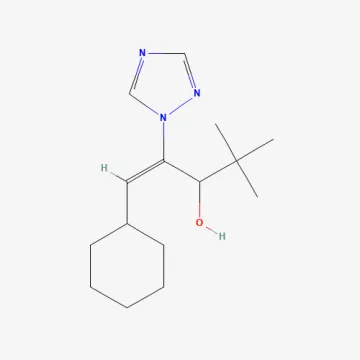
Triapenthenol
Description
Mode of action
Triapenthenol belongs to the class of plant growth regulators (PGRs) acting as retarding agents. Its primary function is to modify the plant's hormonal balance by inhibiting gibberellin biosynthesis, which is responsible for cell elongation in stems and stalks.
The mechanism of action focuses on shortening internode length, resulting in a more compact plant structure. By diverting energy from excessive vegetative elongation towards the root system and structural stem tissues, the plant becomes more robust and resilient.
This compound acts as an antagonist to natural growth hormones, providing a controlled environment for crop development under intensive farming conditions. It is essential for high-yield systems where excessive growth is a risk factor for crop failure.
Unlike fungicides, triapenthenol does not kill pathogens directly but enhances the plant's physical architecture, which indirectly helps the crop withstand environmental stressors like wind and heavy rain. Stronger stems reduce the risk of lodging significantly.
The biological effect is gradual and relies on timely application during the plant's peak growth stages. It is essential for modern agriculture to ensure maximum efficiency in nutrient uptake and overall biomass management.
What it targets
Triapenthenol is primarily used on cereal crops such as winter wheat, barley, and rye. It is designed to manage plant height and prevent lodging in high-fertility environments where plants are prone to excessive growth.
The application is aimed at improving the uniformity of the crop stand, which simplifies the harvesting process. By preventing fallen crops, the product helps minimize yield losses and maintains grain quality during harvest.
In addition to grain crops, triapenthenol is used in horticultural applications to control the growth of shrubs and ornamental plants. This helps in maintaining a desired compact shape and improving the aesthetic value of the plants.
The compound is particularly beneficial for crops that receive high levels of nitrogen fertilization. In such scenarios, triapenthenol manages the rapid growth response, ensuring that the crop does not become overgrown or susceptible to lodging.
Overall, the target is to balance the vegetative growth with reproductive potential, ensuring that resources are optimally used for the formation of the harvestable product.
Rates and timing
Application rates are determined by the crop variety, growth stage, and specific agronomic objectives. It is crucial to follow the guidelines provided by the product manufacturer to achieve the desired growth control without causing stress.
The optimal timing for application is during the tillering and early stem elongation phases. Applying the regulator at these critical stages ensures that the morphological changes are effective throughout the crop's development cycle.
The application should be performed under favorable weather conditions to prevent drift and ensure even coverage. Temperature ranges provided in the label must be strictly adhered to for optimal efficacy.
When mixing with other pesticides or fertilizers, a compatibility test is necessary. Mixing should be done correctly, following the manufacturer’s instructions to ensure the stability of the active ingredient and prevent sedimentation.
Precise calibration of application equipment is essential. Over-application can lead to stunted plant growth or phytotoxicity, while under-application may fail to provide the necessary lodging protection.
Restrictions
Safety during handling is mandatory, requiring the use of personal protective equipment, including gloves, goggles, and protective suits. Proper storage in a cool, dry area, away from children and animals, is required at all times.
Environmental protection is a key limitation; the product must not be allowed to enter water bodies or drainage systems. Buffer zones must be maintained when applying the product near populated areas or sensitive ecosystems like apiaries.
Stress conditions such as extreme drought or severe frost are contraindications for treatment. Applying the growth regulator during these times can increase the risk of plant injury and reduce the overall efficiency of the product.
The product has a specific shelf life and must be stored according to temperature requirements to maintain its chemical activity. Always check the expiration date and integrity of the packaging before use.
Equipment cleanup is a final safety step that must not be overlooked. After application, all spraying machinery must be thoroughly cleaned to prevent any cross-contamination during subsequent tasks in the field.
Status in the European Union
Not approved in the EU
- CAS number
- 76608-88-3
- Category (EU)
- PG - Plant growth regulator
EU status is for reference only and does not replace national registration in your country.