
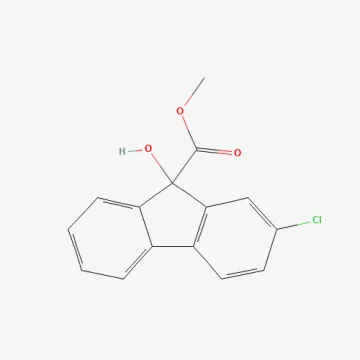
Chlorflurenol
Description
Mode of action
Chlorflurenol belongs to the class of morphactins, which are synthetic compounds derived from fluorene that act as plant growth regulators. Their primary mechanism of action involves the inhibition of auxin transport within plant tissues, thereby disrupting normal development pathways.
Unlike natural phytohormones, this substance suppresses apical dominance, causing plants to lose their structural orientation. Under its influence, cell division in meristems is halted, leading to stem malformation, leaf curling, and erratic fruit development.
The compound interferes with the plant's metabolic processes by blocking phototropism and geotropism. Consequently, the plant loses its ability to respond to external stimuli, rendering its growth and reproductive cycle ineffective.
The efficacy of chlorflurenol is highly dependent on the plant's phenological stage. When applied during critical metabolic windows, it can effectively redirect the plant's energy resources, which is a key principle in managing flowering and fruit set.
In tank mixes, chlorflurenol serves as a synergist, enhancing the penetration of other herbicides into the weed's vascular system. This property is crucial for developing integrated pest management programs for various crops.
What it targets
Chlorflurenol is primarily used to control broadleaf weeds, effectively suppressing their vegetative growth and reproduction. It also demonstrates efficacy against specific vining species and certain perennial grasses depending on the application method.
In fruit production, the substance is used as a growth regulator for thinning blossoms in pome fruits. This helps prevent crop overload, thereby improving the size and quality of the remaining harvest.
On turfgrasses and sports fields, the chemical is utilized to slow down growth rates. This creates a denser sward and reduces the frequency of mechanical mowing required to maintain the landscape.
The ornamental industry employs chlorflurenol to produce compact, well-branched, and profusely flowering plants. It allows for height control without the need for manual pruning or intensive shaping.
Chlorflurenol is a valuable tool for managing weed populations that have developed resistance to traditional 2,4-D herbicides, due to its unique mechanism of interfering with the plant's hormonal balance.
Rates and timing
Application timing must be strictly synchronized with the crop's growth stages. The most significant effects are achieved during periods of active growth, when high metabolic activity allows for rapid absorption and translocation of the active ingredient.
Application rates vary depending on the specific objective: from preventing lodging in small grains to complete weed desiccation. Deviations from recommended dosages can result in phytotoxicity to the crop or a lack of desired efficacy.
Solutions must be prepared immediately before application using clean, neutral-pH water. Achieving uniform coverage of the foliage is essential to maximize the absorption of the active compound into the plant system.
A minimum interval of two weeks between applications is recommended to avoid the buildup of excessive growth-inhibiting residues. Repeated treatments should only occur after a careful visual assessment of the crop's condition.
The use of surfactants or adjuvants with chlorflurenol enhances foliar adhesion and uptake. This allows for lower application rates, improving the cost-efficiency of large-scale agricultural operations.
Restrictions
Chlorflurenol is a biologically active substance that requires careful handling. Operators must wear appropriate personal protective equipment, including skin, eye, and respiratory protection, to prevent accidental exposure.
Application near water bodies is prohibited to prevent environmental contamination and negative impacts on aquatic ecosystems. Drift control measures must be strictly followed to protect neighboring crops and sensitive areas.
The substance may persist in the soil for several weeks; therefore, crop rotation plans must account for potential residual effects on subsequent plantings. Monitoring for carryover effects is recommended for sensitive rotational crops.
Storage must be in a cool, dry place, keeping the product strictly within its original containers to maintain stability. Access must be restricted to prevent accidental exposure to children, unauthorized persons, or livestock.
Disposal of empty containers and chemical residues must comply with national regulations for hazardous waste. Do not discharge waste into municipal sewer systems or regular household trash.
Status in the European Union
Not approved in the EU
- CAS number
- 2536-31-4
- Category (EU)
- PG - Plant growth regulator
EU status is for reference only and does not replace national registration in your country.