
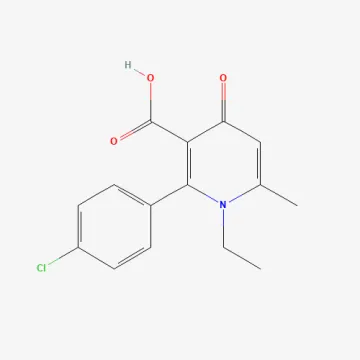
Chloretazate
Description
Mode of action
Chloretazates are a group of chlorinated organic acid derivatives classified as selective systemic herbicides. These substances exhibit strong auxin-like activity, allowing them to exert a profound effect on the physiological growth processes of target unwanted vegetation.
Once absorbed by the plant, the active ingredients move rapidly through the phloem and xylem to the growing points. This induces uncontrolled cell division and disruption of metabolic pathways, ultimately leading to significant tissue deformation and plant death.
The primary function of this substance group is the redistribution of nutrient flows within the plant. Consequently, affected weeds lose the ability to photosynthesize and maintain normal vascular functions, which leads to their inevitable decline and death.
The effectiveness of this group is directly dependent on the metabolic activity of the weeds. These herbicides are most potent during the active vegetative growth phase, as weeds at this stage absorb water and nutrients with maximum intensity.
Unlike contact herbicides, chloretazates provide deep translocation into the root system. This characteristic makes them indispensable for controlling perennial rhizomatous weeds, which are otherwise extremely difficult to eradicate using mechanical tillage methods.
What it targets
This group of substances is primarily used to control a broad spectrum of broad-leaved weeds, including particularly stubborn perennial species. They demonstrate high efficacy against thistles, field bindweed, and various species of knotweed.
Formulations based on chloretazates are widely employed in cereal crops, such as winter and spring wheat, barley, and rye. They are also utilized in maize and certain industrial crops to keep fields free from weeds during critical early growth stages.
A key advantage of this group is the ability to destroy weeds that have developed resistance to other herbicide classes. Due to their specific mode of action, chloretazates are frequently included in tank mixtures to expand the range of controlled weed species.
High sensitivity of weeds is observed at early development stages, specifically during the cotyledon or the first pair of true leaves. This allows agronomists to perform applications with minimal amounts of the active ingredient while achieving maximum control results.
- Cirsium arvense (Creeping thistle)
- Sonchus arvensis (Perennial sow thistle)
- Convolvulus arvensis (Field bindweed)
- Polygonum species (Knotweeds)
- Chenopodium album (Common lambsquarters)
Rates and timing
The application rates for chloretazates depend on the weed species composition and the growth stage of the main crop. Generally, application is performed via spraying during the period of intensive weed growth, which requires adherence to optimal environmental conditions.
The optimal temperature range for application is between +12 and +22 degrees Celsius. At lower temperatures, the systemic activity of the active ingredients slows down, which can significantly decrease the overall efficiency of the crop protection efforts.
Application timing is strictly regulated by the biological development stages of the crops. For example, in cereal crops, applications must be completed before the jointing stage to prevent any negative impact on the development of the ear.
When preparing tank mixtures, it is essential to conduct compatibility tests. While chloretazates often show synergy with sulfonylureas, improper ratios can lead to potential phytotoxicity, harming the cultural plants being protected.
Water used for preparing the spray solution must be free of mechanical impurities and have a neutral pH. Proper nozzle calibration ensures uniform distribution of the active substance across the weed leaf surfaces.
Restrictions
The main limitation when working with chloretazates is the strict observance of buffer zones around residential areas and water bodies. Active ingredients in this group can be wind-drifted, requiring careful monitoring of weather conditions during spraying.
Applications during the flowering period of honey-producing plants are strictly prohibited to avoid harm to bees. Treatments should be scheduled during evening or morning hours when insect activity is minimal and evaporation rates are lower.
Crop rotation must be carefully planned when using these herbicides. Residual amounts of active ingredients in the soil may be phytotoxic to subsequent crops, particularly those sensitive to hormone-type pesticides.
Personnel handling these chemicals must use personal protective equipment, including respirators, gloves, and specialized clothing. Direct contact with skin or mucous membranes must be avoided to prevent allergic reactions or toxic effects.
Storage must be restricted to specialized facilities with limited access. Containers must be tightly sealed, and empty packaging must be disposed of according to national environmental and safety legislation.
Status in the European Union
Not approved in the EU
- Category (EU)
- PG - Plant growth regulator
EU status is for reference only and does not replace national registration in your country.