
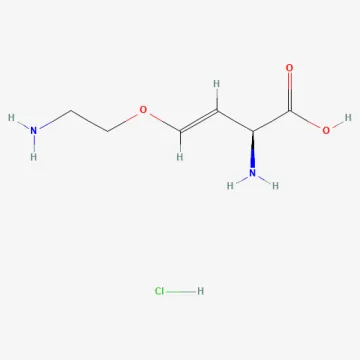
Aviglycine HCL
Description
Mode of action
Aviglycine hydrochloride belongs to the class of plant growth regulators known as ethylene inhibitors. It plays a critical role in managing plant physiology by suppressing the internal hormonal signals that trigger ripening and senescence.
The primary mechanism of action is the inhibition of ACC synthase, a key enzyme in the biosynthetic pathway of ethylene. By reducing ethylene levels, the compound significantly delays the ripening process.
This suppression leads to the stabilization of fruit tissues, preventing the rapid breakdown of cell walls that typically occurs as a fruit matures on the tree.
The substance is absorbed systemically and works to maintain the structural integrity of the fruit, which is essential for preventing pre-harvest drop in various pome fruits.
By modulating the ethylene cycle, Aviglycine hydrochloride provides growers with a more controlled harvest window, reducing pressure during the peak picking season.
What it targets
This compound is primarily used in pome fruit orchards, including apples and pears, to combat the issue of pre-harvest fruit drop, which causes significant economic loss.
It is specifically targeted at preventing the enzymatic process that weakens the abscission zone between the fruit pedicel and the branch.
Beyond preventing drop, the substance is used to maintain fruit firmness, which is a major factor in post-harvest quality and extended cold storage life.
It also helps in retaining the desirable green color of fruit skin in specific varieties, preventing premature yellowing while the fruit remains on the tree.
The application is aimed at achieving uniform fruit maturity and improving the overall handling characteristics of the harvested crop.
Rates and timing
The application rate is strictly dependent on the specific fruit variety and the remaining time until the scheduled harvest date. Accurate dosage is crucial for achieving desired results.
Treatments are timed according to phenological observations of the orchard, typically prior to the onset of natural ethylene production surge.
A uniform application to ensure complete coverage of the canopy is required for maximum efficacy. Proper calibration of spraying equipment is essential for uniform distribution.
Limiting the number of applications per season is a standard requirement to prevent over-inhibition of ethylene, which could potentially impact plant health in the following season.
Growers should follow region-specific guidelines regarding application timing to avoid any negative interaction with late-season weather patterns.
Restrictions
Strict adherence to pre-harvest intervals (PHI) is mandatory to ensure that the chemical residues on the fruit are well within safety limits for consumer consumption.
Application should be avoided on trees suffering from significant abiotic stress, such as drought, nutrient deficiencies, or severe pest and disease infestations.
Care must be taken to prevent drift onto non-target crops, as the biological activity of the regulator can affect the growth and development of other plant species.
The product should be stored in a cool, dry area in its original sealed container to maintain chemical stability and prevent degradation over time.
Operators must wear appropriate personal protective equipment (PPE), including skin and respiratory protection, during mixing and application procedures.
Status in the European Union
Not approved in the EU
- CAS number
- 55720-26-8
- Category (EU)
- PG - Plant growth regulator
EU status is for reference only and does not replace national registration in your country.