
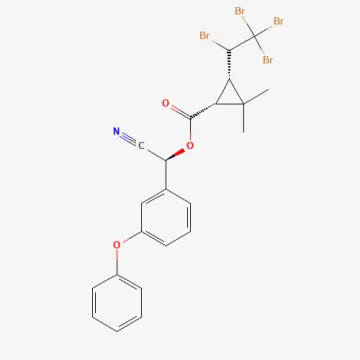
Tralomethrin
Description
Mode of action
Tralomethrin is a synthetic pyrethroid insecticide known for its high potency against a variety of agricultural pests. It acts primarily through contact and ingestion.
The mechanism of action involves targeting the nervous system of the insect by disrupting the normal functioning of sodium channels in nerve cell membranes.
By keeping these channels open, the substance causes rapid depolarization of the nerve fibers, leading to hyperactivity, tremors, and finally paralysis of the insect.
This rapid inhibition of nervous impulses creates the characteristic "knock-down" effect, stopping the pest from feeding almost immediately upon exposure to the product.
Because it is a non-systemic insecticide, it does not translocate within the plant tissues, which necessitates thorough coverage of the plant surface during application for optimal efficacy.
What it targets
This compound is used to manage a wide range of insect populations that threaten the health and productivity of various cultivated plant species.
It is specifically effective against lepidopteran larvae, coleopteran beetles, and certain hemipteran pests that are common in field crops, vegetables, and ornamental plants.
Tralomethrin is widely valued for its ability to control pests that are resistant to other common insecticide classes, making it a key component in integrated pest management strategies.
It is especially useful during the early stages of infestation to prevent the pest population from reaching the economic threshold of damage.
- Caterpillars and foliage-feeding larvae
- Beetles damaging crops
- Aphids and plant-sucking insects
- Leafminers and leafhoppers
Rates and timing
Application rates for tralomethrin are determined by the specific target pest, the growth stage of the crop, and local environmental conditions at the time of spraying.
It is recommended to apply the product at the first sign of pest activity to maximize the protective effect and prevent significant damage to the plant canopy.
Optimal spray conditions include low wind speeds and moderate temperatures to ensure uniform coverage and reduce the risk of environmental drift.
The frequency of application should be limited to prevent the development of insect resistance, ensuring the product remains effective over multiple growing seasons.
Always adhere to the pre-harvest interval (PHI) as specified on the product label to ensure that residues on the final crop are within safe, legal limits.
Restrictions
Tralomethrin is highly toxic to aquatic organisms and bees; therefore, application during the flowering stage or near water bodies must be strictly avoided.
Personal Protective Equipment (PPE), including appropriate respirators and chemical-resistant gloves, is mandatory for all personnel involved in the mixing and application process.
To avoid chemical degradation, it should not be mixed with highly alkaline substances, which can significantly reduce its efficacy in the field.
Storage must be maintained in a cool, dry, and well-ventilated area, securely locked to prevent access by unauthorized individuals, children, or pets.
Disposal of unused product and empty containers must be carried out in strict accordance with local environmental regulations to protect soil and water resources.
Status in the European Union
Not approved in the EU
- CAS number
- 66841-25-6
- Category (EU)
- IN - Insecticide
EU status is for reference only and does not replace national registration in your country.