
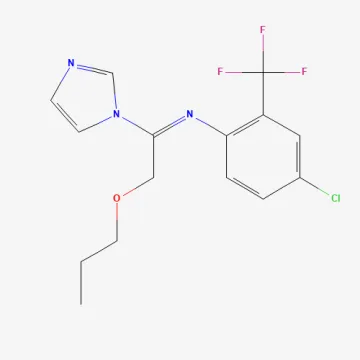
Triflumizole
Description
Mode of action
Triflumizole belongs to the imidazole chemical class and acts as a systemic fungicide with both preventive and curative properties. Its mechanism of action within plant tissues is based on the inhibition of ergosterol biosynthesis, which is essential for the formation of fungal cell membranes.
The compound is capable of penetrating deep into plant tissues, providing long-lasting protection against reinfection. Due to its translaminar properties, triflumizole quickly distributes within the leaf, making it effective even if coverage is incomplete during spraying.
Upon reaching the plant, the substance blocks mycelium development and prevents the further germination of pathogen spores. This mode of action allows it to effectively stop the progress of a disease even after the first visual signs of infection appear on the crop.
The duration of triflumizole's protective effect depends directly on weather conditions, the plant's growth stage, and the level of infection pressure. On average, the period of active protection ranges from two to four weeks following application.
Unlike contact-only products, this substance is characterized by high resistance to wash-off by rain, as it is rapidly absorbed by the epidermis and remains effective even if precipitation occurs several hours after the application of the working solution.
What it targets
Triflumizole-based products are most commonly used to combat powdery mildew fungi that affect a wide range of agricultural and ornamental crops. It demonstrates high efficacy against various species of the Erysiphaceae family.
In addition to powdery mildew, its spectrum of action includes the control of various leaf spots, rusts, and certain types of rot that attack fruits and foliage. The product is successfully used in intensive orchards and on greenhouse vegetable crops.
- Powdery mildew on cucumbers and tomatoes
- American powdery mildew on gooseberries and currants
- Scab of fruit crops
- Various types of rust on floral crops
The product is actively used in protected environments when cultivating roses and other ornamental plants, where maintaining the commercial appearance of leaves and inflorescences against fungal deposits is critical.
Using triflumizole helps prevent a decline in the leaf's photosynthetic activity, which directly impacts the yield and quality of produce when growing vegetables and berries.
Rates and timing
The application rates of the product vary depending on the specific crop, the type of greenhouse or open field, and the level of infection pressure. Precise values are always regulated by the instructions provided with the specific commercial product.
Application is typically performed by spraying during the vegetation period. It is important to distribute the working solution evenly to ensure high-quality coverage of all plant parts, including the underside of the leaves.
To achieve maximum results, the first application is recommended as soon as the very first signs of disease appear. Preventive treatments show the best effectiveness by stopping the mass spread of the infection.
The intervals between repeat applications are established based on the intensity of disease development and weather factors. Under conditions of high risk for an epiphytotic outbreak, the number of applications may be increased while adhering to the specified pre-harvest interval.
Before beginning field operations, a stock solution must be prepared, which is then diluted to the required working volume in the sprayer tank. It is recommended to use clean water for preparing the mixture to avoid reducing the activity of the active ingredients.
Restrictions
Triflumizole requires adherence to standard safety precautions when working with agrochemicals. It is necessary to use personal protective equipment for the skin, respiratory tract, and eyes to prevent contact with mucous membranes.
An important limitation is strict adherence to pre-harvest intervals to ensure the absence of residue levels of the active substance in the marketable produce. These standards are clearly documented in the official pesticide registry.
It is not recommended to conduct applications during periods of high solar activity or during strong winds, as this reduces the product's effectiveness and increases the risk of drift onto neighboring fields.
With prolonged use of fungicides from the same class, there is a risk of resistance developing in pathogens. Therefore, agronomists recommend rotating triflumizole with fungicides from other chemical groups that have a different mechanism of action.
Disposal of product residues and packaging must be carried out in strict accordance with environmental regulations. Discharging remaining solution into bodies of water or sewage systems is prohibited to prevent environmental pollution.
Status in the European Union
Not approved in the EU
- CAS number
- 68694-11-1
- Category (EU)
- FU - Fungicide
- Approved from
- 01.07.2010
- Approval until
- 30.06.2020
- ADI
- 0.05 mg/kg bw/day
- ARfD
- 0.1 mg/kg bw
- AOEL
- 0.05 mg/kg bw/day
EU status is for reference only and does not replace national registration in your country.