
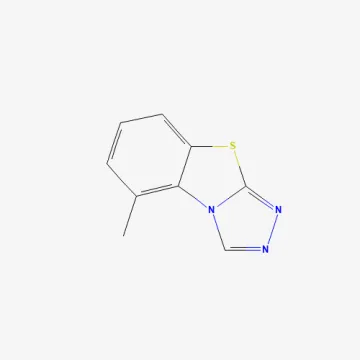
Tricyclazole
Description
Mode of action
Tricyclazole belongs to the triazolobenzothiazole chemical class and serves as a highly specialized systemic fungicide.
Its primary mode of action is the inhibition of melanin biosynthesis in fungi, which prevents the development of the pathogen.
By inhibiting the enzyme responsible for the conversion of 1,8-dihydroxynaphthalene, the fungicide prevents the formation of appressoria.
Without functional appressoria, the fungus is physically unable to penetrate the host plant's epidermis and establish an infection.
The compound exhibits excellent systemic movement, being absorbed through leaves and roots and translocated acropetally to protect new growth.
What it targets
The primary target for tricyclazole application is rice blast disease, caused by the fungus Pyricularia oryzae.
Rice blast remains the most destructive disease affecting rice crops globally, causing significant yield losses if left untreated.
Tricyclazole is uniquely effective against this specific pathogen and is a standard component of integrated pest management for rice.
Rates and timing
Standard application rates usually range from 200 to 400 grams of active ingredient per hectare depending on the specific formulation.
The first application should ideally occur at the tillering stage, especially under conditions favorable for disease development.
A second application at the booting or heading stage is often crucial to protect the panicles, which are highly susceptible to infection.
Restrictions
Tricyclazole must be handled with care due to its potential toxicity to aquatic environments, including fish and aquatic invertebrates.
Strict adherence to buffer zones near water bodies and irrigation channels is mandatory during and after application.
Operators must wear appropriate personal protective equipment to prevent dermal or respiratory exposure during mixing and spraying.
Harvesting should only take place after the required pre-harvest interval has elapsed to ensure compliance with food safety standards.
Status in the European Union
Not approved in the EU
- CAS number
- 41814-78-2
- Category (EU)
- FU - Fungicide
- ADI
- 0.05 mg/kg bw/day
- ARfD
- 0.05 mg/kg bw
EU status is for reference only and does not replace national registration in your country.