
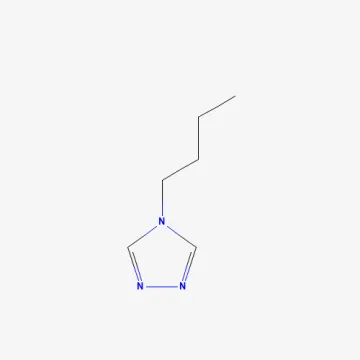
Triazbutyl
Description
Mode of action
Triazbutyl is a chemical compound classified as a plant growth regulator, primarily used as a defoliant to facilitate the mechanical harvesting of various industrial crops.
The mode of action involves stimulating the formation of an abscission layer at the base of the leaf petiole. This process mimics the plant's natural senescence, leading to leaf drop.
By inhibiting chlorophyll production and altering hormone balances, triazbutyl encourages the plant to shift its energy towards fruit ripening, resulting in more uniform harvest maturity.
This substance is crucial for modern industrial farming where machine harvesting is standard. It significantly reduces the amount of green debris that could otherwise contaminate the final harvested product.
Unlike herbicidal treatments that kill plants, triazbutyl is a physiological tool designed to manage plant morphology and phenology without causing permanent structural damage to the crop's yield-bearing organs.
What it targets
The primary crop for triazbutyl application is cotton. Defoliation is a standard practice in cotton production to remove vegetative mass, ensuring clean harvesting and high-quality fiber.
It can also be utilized in other industrial crops where the removal of foliage is necessary to improve air circulation, reduce humidity within the canopy, and prepare for mechanical collection.
The effectiveness of triazbutyl is consistent across various cotton cultivars, provided the application timing aligns with the developmental stage of the crop and the environmental conditions.
While not a herbicide, triazbutyl can indirectly assist in managing field weeds by exposing them to light and making them more susceptible to subsequent harvesting or post-harvest cultural practices.
The use of this compound is fundamental for achieving efficiency in large-scale cotton plantations, where manual harvesting is logistically impossible or economically unviable.
Rates and timing
Application rates for triazbutyl are calculated based on the crop's maturity stage, canopy density, and local weather patterns during the expected window for application.
The optimal window for treatment typically begins when approximately 50% of the cotton bolls have opened. Applications made too early may stunt plant growth, whereas delayed applications lose efficacy.
Applying the product requires an even distribution of the spray solution over all foliage surfaces to ensure uniform defoliation and to avoid patchy results across the field.
It is recommended to apply during calm weather conditions to prevent drift, ensuring that the chemical reaches the target plants effectively without impacting neighboring sensitive crops.
In most commercial scenarios, a single application is sufficient to induce the desired level of leaf drop within a 7 to 14-day period, allowing for timely harvest commencement.
Restrictions
Operators handling triazbutyl must wear appropriate personal protective equipment (PPE), including respiratory protection and protective clothing, to avoid skin contact and inhalation.
Strict precautions must be taken to prevent contamination of water bodies, wells, and areas with livestock, as the chemical can have adverse effects on non-target environments.
Temperature limitations are critical; applying triazbutyl when temperatures are below 15°C will significantly decrease plant metabolic activity, rendering the treatment ineffective.
Storage must be in a secure, cool, and dry environment that complies with local safety regulations to prevent chemical degradation and unauthorized access to the product.
Farmers must adhere to the mandatory pre-harvest interval (PHI) following the application to ensure that no harmful chemical residues remain in the harvested cotton or seed oil products.
Status in the European Union
Not approved in the EU
- CAS number
- 16227-10-4
- Category (EU)
- FU - Fungicide
EU status is for reference only and does not replace national registration in your country.