
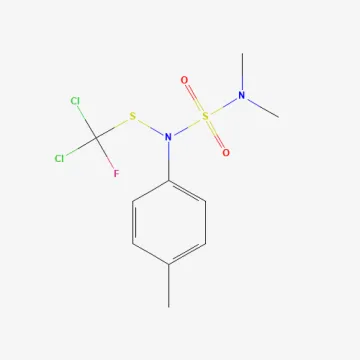
Tolylfluanid
Description
Mode of action
Tolylfluanid belongs to the sulfenamide class of chemicals. It is a broad-spectrum contact fungicide that provides a robust protective layer on the plant surface, preventing fungal spores from germinating and colonizing the host tissue.
The mechanism of action relies on the inhibition of essential enzymatic processes within the fungal cell. By interfering with respiration and amino acid metabolism, tolylfluanid disrupts the fungus's ability to develop, ultimately causing the destruction of spores and mycelia.
As a contact fungicide, it does not translocate within the plant. Consequently, the effectiveness of the treatment is highly dependent on achieving uniform coverage of the plant parts, including the undersides of leaves and developing fruit.
Tolylfluanid is particularly useful for its ability to suppress spore production. By reducing the inoculum pressure in the field, it plays a vital role in preventing the secondary spread of diseases throughout the growing season.
Due to its specific mode of action, it is frequently employed in integrated pest management programs, often alternated with systemic fungicides to reduce the risk of pathogen resistance and ensure sustainable disease control.
What it targets
Tolylfluanid is effective against a wide range of fungal pathogens affecting horticultural and orchard crops. It is widely recognized for its efficacy against grey mold, a major pathogen that causes significant losses in berries, grapes, and various vegetables.
In pome fruit orchards, tolylfluanid is used as an essential tool for the management of apple and pear scab. Regular application helps maintain fruit quality and minimizes damage to the harvest.
The active substance is also active against various leaf spot diseases that can compromise plant health and yield. Its application on grapevines provides necessary protection against downy mildew and other fungal infections.
Additionally, it is applied to ornamental plants to maintain aesthetic appeal by preventing the development of leaf lesions and necrotic spots often caused by excess humidity and fungal exposure.
- Grey mold (Botrytis cinerea)
- Apple and pear scab (Venturia spp.)
- Downy mildew (Plasmopara viticola)
- Various fungal leaf spots
Rates and timing
Application rates for tolylfluanid are determined by the target crop, disease intensity, and specific growth stage. Preventive applications are recommended before the onset of conditions favorable to infection, particularly during flowering and fruit set.
Thorough coverage is crucial for optimal results. The volume of the spray solution should be sufficient to coat the foliage and fruit completely without excessive runoff, ensuring the protective barrier remains intact.
The timing of applications should be adjusted based on environmental factors, such as rainfall and humidity, which may wash away the contact residue. Under high disease pressure, repeated sprays at 7 to 14-day intervals are often necessary.
Proper calibration of spraying equipment is essential to ensure consistent droplet distribution. This helps avoid both under-dosing, which might lead to disease escape, and over-dosing, which is both uneconomical and environmentally undesirable.
Always adhere to the specific product label recommendations regarding dosage and timing to achieve the highest level of control while minimizing the environmental footprint and ensuring crop safety.
Restrictions
Users must employ appropriate personal protective equipment (PPE) when handling tolylfluanid, including protection for eyes, skin, and the respiratory tract, to prevent irritation during mixing and application.
The substance is known to be toxic to aquatic life. Strict precautions must be taken to prevent drift into adjacent waterways and to avoid contaminating water sources during sprayer cleaning or disposal of unused product.
Pre-harvest intervals (PHI) must be strictly followed to ensure that residues on the final product are within safe regulatory limits for human consumption. Compliance with these intervals is a mandatory part of agricultural safety.
Do not apply during periods of high wind or extreme heat to prevent drift and ensure the product settles properly on the target surfaces. Morning or late afternoon applications are generally preferred.
Storage should be in a cool, dry, and well-ventilated area, kept away from food, animal feed, and children. The original packaging must remain sealed to prevent degradation of the active ingredient and accidental exposure.
Status in the European Union
Not approved in the EU
- CAS number
- 731-27-1
- Category (EU)
- FU - Fungicide
- ADI
- 0.1 mg/kg bw/day
- ARfD
- 0.25 mg/kg bw
- AOEL
- 0.3 mg/kg bw/day
EU status is for reference only and does not replace national registration in your country.