
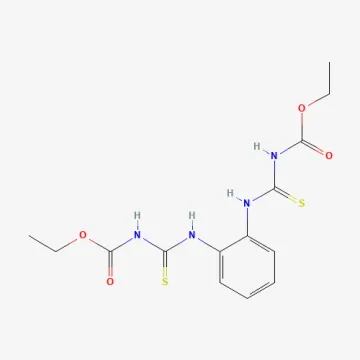
Thiophanate-methyl
Description
Mode of action
Thiophanate-methyl is a broad-spectrum systemic fungicide belonging to the benzimidazole chemical class. Once applied, it is rapidly absorbed by plant tissues and translocated systemically throughout the plant, providing protection for both existing and new growth.
The mode of action involves the inhibition of beta-tubulin synthesis within the pathogen. This disruption prevents the formation of mitotic spindles, effectively stopping cell division and leading to the eventual death of the fungal mycelium.
This active substance offers both protective and curative properties. It is highly effective at stopping infection early in its development by penetrating the host tissue where contact fungicides would be less effective.
Because of its systemic nature, Thiophanate-methyl provides long-lasting control, which helps in optimizing the spray schedule and reducing the total number of applications during the growing season.
Once dry on the leaf surface, the product is resistant to rain wash-off, ensuring stability even in unpredictable weather conditions common during the spring and summer months.
What it targets
Thiophanate-methyl is utilized to combat a wide array of fungal pathogens. It is specifically targeted against powdery mildew, various leaf spot diseases, scabs, and fruit rots, making it a versatile tool for agricultural management.
It is widely applied on various crops including cereals, sugar beets, apples, pears, cucumbers, and tomatoes. Additionally, it serves as an effective seed treatment, protecting germinating seedlings from soil-borne pathogens.
- Powdery mildew
- Apple scab
- Gray and white mold
- Cercospora leaf spot
- Fusarium root rot
Rates and timing
Application rates depend on the specific crop, the intensity of disease pressure, and the method of application. Standard dosages typically range from 0.8 to 2.0 kg/ha or L/ha for field crops.
Treatment should be timed according to the phenological stage of the crop and the appearance of the first disease symptoms to maximize efficiency and ensure the health of the plant.
While the product is compatible with most other pesticides, it is recommended to perform a jar test before mixing with other chemicals to ensure stability and compatibility in the tank.
The volume of the spray solution should be sufficient to ensure uniform coverage of all plant surfaces, as uniform distribution is key to the performance of systemic fungicides.
To prevent the build-up of resistant fungal strains, it is generally advised to limit the number of applications to a maximum of two per season.
Restrictions
The primary constraint regarding Thiophanate-methyl is the high risk of cross-resistance in pathogens. Consequently, it must be rotated with fungicides from different chemical classes to maintain long-term effectiveness.
The substance is moderately toxic to bees, so applications during flowering should be avoided or conducted during times when bees are not active, such as in the late evening, to minimize impact on pollinators.
Personal Protective Equipment (PPE) including gloves, goggles, and respiratory protection must be worn at all times when handling or applying the concentrated or diluted product to ensure safety.
Adherence to pre-harvest intervals (PHI) is mandatory to ensure that the produce is safe for consumption and complies with international maximum residue limit (MRL) standards.
Storage must be in a cool, dry, and secure location away from direct sunlight, children, animals, and water sources to prevent accidental contamination or environmental exposure.
Status in the European Union
Not approved in the EU
- CAS number
- 23564-06-9
- Category (EU)
- FU - Fungicide
EU status is for reference only and does not replace national registration in your country.