
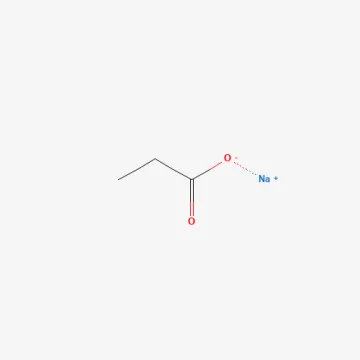
Sodium propionate
Description
Mode of action
Sodium propionate belongs to the group of propionic acid salts and acts as an effective fungicidal agent. Its function is based on the ability to suppress microorganism metabolism by disrupting their enzymatic processes.
The substance penetrates pathogen cell walls, causing changes in intracellular pH, which leads to protein denaturation and arrests the development of fungal structures. It interferes with normal lipid synthesis in microscopic fungi, blocking their reproduction.
Unlike many systemic pesticides, sodium propionate has a primarily contact and preventive mechanism of action. It creates a protective barrier on the treated surface that prevents fungal spores from germinating.
The chemical nature of the compound allows it to effectively destroy mycelium during early stages of colonization. This makes it a valuable tool for reducing the infection load without the risk of toxic residue accumulation.
The preparation is characterized by selectivity toward certain groups of micromycetes, which allows it to be used in integrated crop protection systems.
What it targets
The main application of sodium propionate is the control of mold fungi of the genera Aspergillus, Penicillium, and Fusarium. These pathogens often infect grain crops during storage.
The preparation is also effective against a wide range of microorganisms causing spoilage of agricultural produce and feed. It actively suppresses the development of phytopathogenic flora on the surface of vegetables and fruits.
In agronomy, it is used to prevent mycotoxicosis occurring during silage and haylage storage. The substance successfully stops rot processes caused by fungal activity.
Using it as a component of seed treatment formulations helps reduce seed infection by surface pathogens during the germination period.
The preparation can be used as an auxiliary agent to control epiphytic microflora in grain stores and vegetable warehouses.
Rates and timing
The dosage of sodium propionate directly depends on the moisture level of the product being treated and the expected storage duration. Higher moisture content requires a higher concentration of the substance for effective fungal suppression.
When preserving high-moisture forage grain, application rates may range from 2 to 5 kg per ton of product. Accurate application must consider the initial purity of the raw material and storage temperature conditions.
Timing of application is linked to the moment the crop is placed into storage. The optimal time for treatment is immediately after harvesting or primary cleaning to prevent the initiation of fungal processes.
For pre-sowing seed treatment, working solutions of specific concentrations are used to ensure uniform surface coverage without compromising seed germination.
Repeat treatments are performed strictly upon detection of the first signs of phytosanitary deterioration, provided such measures are included in the specific product regulations.
Restrictions
The use of sodium propionate is limited by its moderate hygroscopicity, which requires storage in dry, well-ventilated rooms. The substance is sensitive to moisture until the moment of application.
Strict safety regulations must be followed when working with powder forms: use personal protective equipment for the respiratory tract, skin, and eyes to prevent irritation.
It is not recommended to mix the preparation with highly alkaline compositions, as this may lead to a decrease in its fungicidal activity due to chemical neutralization.
It is important to monitor the temperature in areas where treated products are stored, as high temperatures may reduce the effectiveness of active ingredients due to evaporation.
The preparation is considered relatively environmentally safe; however, when working near water bodies, contact of the concentrated substance with open water sources must be excluded.
Status in the European Union
Not approved in the EU
- CAS number
- 137-40-6
- Category (EU)
- FU - Fungicide
EU status is for reference only and does not replace national registration in your country.