
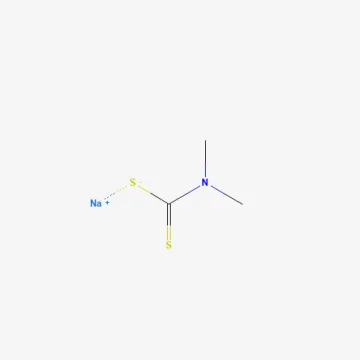
Sodium dimethyldithiocarbamate
Description
Mode of action
Sodium dimethyldithiocarbamate belongs to the dithiocarbamate chemical class. It functions as a powerful soil fumigant and fungicide, widely used in professional agriculture to sterilize soil before planting high-value crops.
The mechanism of action relies on the rapid decomposition of the substance in moist soil, resulting in the release of volatile isothiocyanates. These gaseous compounds penetrate the soil matrix and effectively destroy pathogens by interfering with their cellular enzymes and metabolic processes.
The chemical targets the mycelium, spores, and resting structures of soil-borne fungi, providing a thorough cleansing effect. This prevents the development of complex diseases that often devastate vegetable and flower crops.
Besides its antifungal properties, the substance shows significant insecticidal activity, effectively managing populations of soil-dwelling nematodes and various insect larvae that pose a threat to plant root systems.
Furthermore, it acts as a herbicide by destroying weed seeds and germinating seedlings. This creates a "clean slate" environment for crops, significantly reducing the pressure from competing vegetation during the early establishment phase.
What it targets
The primary use of sodium dimethyldithiocarbamate is the pre-plant disinfection of soil against soil-borne pathogens like Fusarium, Phytophthora, and Rhizoctonia, which cause root and stem rots.
It is highly effective against plant-parasitic nematodes, which are often difficult to control with standard contact pesticides. Fumigation helps protect root health, ensuring optimal nutrient and water uptake for plants.
The substance is also used to target weed seeds that are dormant or beginning to germinate. This prevents the emergence of competitive weeds, saving on later hand-weeding or mechanical cultivation costs.
In greenhouses and nursery environments, it is essential for disinfecting growing substrates and potting mixes, ensuring that seedlings start their life cycle in a sterile, disease-free environment.
It is specifically recommended for fields with high disease pressure or areas suffering from soil sickness, where repeated monoculture has led to the accumulation of harmful soil pathogens.
Rates and timing
Correct application depends heavily on soil texture and moisture levels. Soil must be well-cultivated and possess adequate moisture to ensure the proper release and movement of the active gas through the soil profile.
Precision equipment, such as injectors or specialized soil incorporators, is required for consistent distribution. Following application, sealing the soil surface with plastic tarps or heavy rollers is critical to prevent gas loss and maximize concentration.
A waiting period between application and planting is mandatory. Depending on soil type and temperature, this interval usually ranges from 2 to 4 weeks to allow for the complete dissipation of the fumigant residues.
Failure to observe the safety interval can lead to severe phytotoxicity. If traces of the chemical remain in the soil air when seeds are sown, it may result in root inhibition or total crop failure.
Application is most effective at soil temperatures between 15°C and 25°C. At lower temperatures, the chemical transition is too slow, while at excessively high temperatures, the gas may escape from the soil too quickly.
Restrictions
Strict safety precautions are required during handling. Operators must wear appropriate protective clothing and respirators to prevent inhalation of volatile gases, which are respiratory irritants.
It is strictly prohibited to apply the product in the root zone of existing, established plants (like trees or shrubs), as the chemical will move through the soil and likely cause fatal systemic damage to these plants.
Environmental care is paramount; the substance is toxic to aquatic organisms. Application must ensure no runoff into nearby water bodies, and equipment cleaning must be done in designated areas away from sensitive ecosystems.
Product storage must be in a cool, dry, and well-ventilated area, away from direct sunlight and oxidizing agents. Containers must be tightly sealed at all times to prevent chemical degradation.
- Always use certified PPE for respiratory and skin protection.
- Avoid application during extremely dry or waterlogged soil conditions.
- Perform a germination test before planting to ensure all gas has dissipated.
Status in the European Union
Not approved in the EU
- CAS number
- 128-04-1
- Category (EU)
- FU - Fungicide
EU status is for reference only and does not replace national registration in your country.