
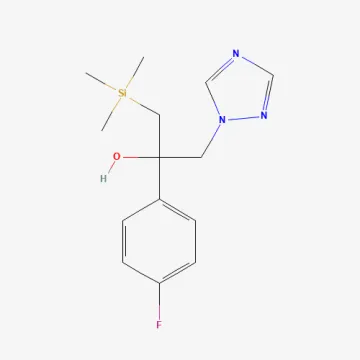
Simeconazole
Description
Mode of action
Simeconazole is a systemic fungicide belonging to the triazole chemical class. Its primary mechanism of action involves the inhibition of the ergosterol biosynthesis pathway in fungal cells, which is essential for maintaining cell membrane structure and function.
By interfering with the production of ergosterol, simeconazole effectively disrupts the development of the fungal mycelium. This inhibition eventually leads to the death of the pathogen, protecting the plant from infection.
Due to its systemic properties, simeconazole is absorbed by seeds upon germination and translocated within the developing seedling. This enables the compound to provide a protective barrier against both seed-borne and soil-borne pathogens.
The compound is characterized by high biological activity and stability, offering a prolonged period of protection. This durability is crucial during the early stages of plant growth, ensuring a healthy crop foundation.
The efficacy of simeconazole is generally stable under various environmental conditions, making it a reliable tool for seed treatments in diverse agricultural settings worldwide.
What it targets
Simeconazole is primarily utilized as a seed treatment fungicide for cereal crops. It targets a broad spectrum of diseases that pose a significant risk to seedling establishment and overall crop vitality.
The substance is particularly effective against various types of smuts and root rots, which can severely impact yield if left untreated. It also provides control over several fungal infections that thrive in the soil environment.
By targeting these pathogens at the initial stage of the crop cycle, simeconazole helps maintain high plant density and uniformity. This is vital for achieving optimal yield potential in cereal production.
Key pathogens controlled by simeconazole include:
- Common bunt of wheat
- Loose smut of wheat and barley
- Helminthosporium root rot
- Fusarium root rot
- Snow mold
Effective management of these diseases using simeconazole prevents significant crop losses and reduces the risk of field replanting due to poor seedling emergence or weak development.
Rates and timing
Application rates for simeconazole depend on the specific formulation, the target crop, and the expected disease pressure. Producers should always follow the guidelines provided by the product manufacturer.
Treatment involves the application of the fungicide to seeds using calibrated equipment. Ensuring uniform coverage of every seed is essential to guarantee the efficacy of the treatment and to minimize potential risks.
Before application, seeds should be cleaned to remove dust and debris, which could interfere with the adhesion of the fungicide. Proper moisture content of the seeds is also a key factor in ensuring successful treatment.
The protection provided by simeconazole starts from the moment the seed is exposed to soil moisture and continues as the primary root system develops. This timing is critical for the early protection of the crop.
While simeconazole is effective, strictly adhering to the recommended doses is important to prevent phytotoxicity. Over-application can sometimes cause delays in germination or seedling growth in sensitive varieties.
Restrictions
Safety is a priority when handling simeconazole. Users must wear appropriate personal protective equipment (PPE), including gloves, goggles, and respiratory protection, to prevent contact with the skin and eyes.
Environmental stewardship is essential; residues or washings must not be discharged into water bodies or sewage systems. Proper disposal of empty containers and chemical remnants is mandatory according to local regulations.
To mitigate the risk of resistance, it is advisable to rotate simeconazole with fungicides from different chemical groups. This strategy ensures the long-term effectiveness of the disease management program.
Storage should be in a cool, dry, and well-ventilated area, securely locked and away from food, feed, and children. Products must be kept in their original, properly labeled containers.
When mixing simeconazole with other pesticides or fertilizers, a compatibility test should always be conducted. This prevents potential physical incompatibility, such as precipitation, which could reduce the efficiency of the treatment.
Status in the European Union
Not approved in the EU
- CAS number
- 149508-90-7
- Category (EU)
- FU - Fungicide
EU status is for reference only and does not replace national registration in your country.