
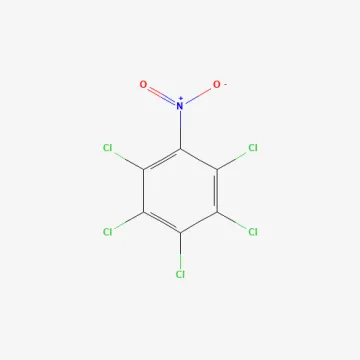
Quintozene
Description
Mode of action
Quintozene belongs to the chloronitrobenzene chemical class. It is a contact fungicide without systemic action, therefore its efficacy directly depends on the quality of distribution in the soil layer or on the seed surface.
The active substance suppresses the respiration processes of pathogenic fungi by blocking oxidative phosphorylation in their cells. This disrupts the pathogen's metabolism and leads to its death before it can penetrate plant tissues.
Unlike systemic preparations, quintozene creates a protective barrier around the root or seed, preventing the infection from entering from the soil. It is characterized by high resistance to leaching and low volatility.
The long period of protective action is due to its low water solubility, which allows the product to maintain its activity in the soil for several weeks after application.
An important aspect is that the product acts exclusively as a preventative, suppressing the development of mycelium at the initial stages of infection without providing any curative effect on already affected tissues.
What it targets
Quintozene is mainly used to combat a complex of soil infections causing root and seedling rots. It is effective against pathogens transmitted through the soil.
- Rhizoctonia solani (Rhizoctonia rot)
- Sclerotinia spp. (Sclerotinia rot)
- Plasmodiophora brassicae (Clubroot)
- Typhula blight of cereals
- Fusarium root rots
The fungicide is most frequently applied to potatoes, vegetables (cabbage, lettuce, onions), and ornamental plants when grown in open fields or greenhouses.
Application against clubroot in cabbage allows for a significant reduction in damage during the early growth stages, preventing seedling loss.
The product is also used for disinfecting substrates in nurseries, where protection of sensitive crops from soil pathogens is required during the seed germination phase.
Rates and timing
The application rates of the product vary depending on the method: seed dressing, in-furrow soil application, or full-surface soil treatment before planting.
During pre-sowing soil treatment, quintozene is applied by broadcasting followed by incorporation with a cultivator to a depth of 5–10 cm to create a uniform protective layer.
For cabbage seedling protection, the product is often applied to planting holes or directly into the soil mixture before transplanting into the field.
Pre-harvest intervals must be strictly observed, as quintozene has the property of accumulating in the soil, requiring consideration of the number of treatments per season.
All operations should be carried out using specialized equipment that ensures uniform distribution of the pesticide across the treated area.
Restrictions
Quintozene requires strict adherence to safety precautions, as it is classified as a moderately hazardous substance. The use of personal protective equipment for the respiratory system and skin is mandatory.
Discharge of the product into water bodies must be avoided, as it is toxic to fish and other aquatic organisms and has the ability to persist in bottom sediments.
Crop rotation is recommended on fields where quintozene has been applied. Sensitive crops should not be sown immediately after soil treatment with high application rates.
The product is incompatible with some oil-based emulsions and highly alkaline formulations, which may lead to reduced stability and phytotoxicity to crops.
The product must be stored in dry, cool warehouse facilities, inaccessible to children and animals, away from food and animal feed.
Status in the European Union
Not approved in the EU
- CAS number
- 82-68-8
- Category (EU)
- FU - Fungicide
- ADI
- 0.01 mg/kg bw/day
- ARfD
- Not appl.
EU status is for reference only and does not replace national registration in your country.