
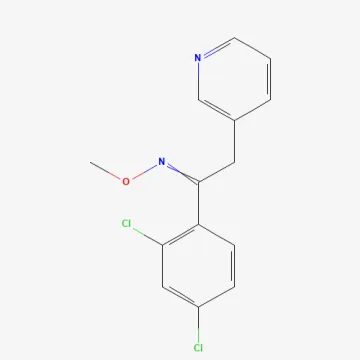
Pyrifenox
Description
Mode of action
Pyrifenox is a potent active substance belonging to the pyridine chemical class. It acts as a systemic fungicide, providing both protective, curative, and eradicative efficacy against a variety of fungal pathogens.
The mode of action of this substance involves the inhibition of ergosterol biosynthesis in fungal cells. Since ergosterol is a crucial structural component of fungal membranes, the disruption of its synthesis leads to the loss of membrane integrity and prevents the growth of mycelium.
Owing to its systemic properties, Pyrifenox is rapidly absorbed into plant tissues. This enables long-lasting protection, covering plant parts that may not have been reached during the initial spraying process.
The substance maintains high activity across a wide range of temperatures, making it a reliable solution for various climatic conditions. It exhibits good adhesion to leaf surfaces, which enhances its resistance to being washed away by rainfall.
By effectively controlling fungal infections, Pyrifenox helps plants maintain their physiological vigor, directly contributing to higher yields and better preservation of harvest quality.
What it targets
Pyrifenox is primarily designated for the control of fungal pathogens from the Ascomycete and Basidiomycete classes. It is considered a benchmark solution for targeting powdery mildew species.
The substance is highly effective against powdery mildew on a wide range of crops, including apples, cucumbers, tomatoes, and various other vegetable crops in both greenhouse and open-field environments.
In viticulture, Pyrifenox is used extensively for the management of grape powdery mildew (Oidium). It provides excellent control of the disease, safeguarding both the foliage and the grape bunches.
The application of this fungicide at the early onset of disease symptoms allows for the effective suppression of infection spread, thereby preventing the development of severe outbreaks.
- Powdery mildew (Erysiphaceae)
- Grapevine powdery mildew (Oidium)
- Various fungal leaf spot diseases
Rates and timing
Application rates for Pyrifenox are determined by the specific crop type, the intensity of disease pressure, and the cultivation method. Users must strictly follow the manufacturer's label instructions to ensure optimal efficacy.
The most favorable timing for treatment is at the first signs of disease. Preventive measures are often employed to maintain low infection levels throughout the growing season.
When used in greenhouse settings, uniform application is essential to ensure that the entire plant canopy is covered. Concentration levels should be adjusted based on the growth stage and crop density.
Preparation of the spray solution requires the use of clean water. If mixing with other agrochemicals, the order of mixing must be followed as per established safety guidelines to ensure the stability of the tank mix.
The number of applications per season is limited to manage the risk of developing resistance and to ensure that residue levels in the final product remain within legal safety thresholds.
Restrictions
Strict adherence to pre-harvest intervals (PHI) is mandatory to ensure food safety. Farmers must ensure that the waiting time after the last application is fully observed before harvesting the crop.
To prevent the selection of resistant pathogen populations, it is advised to rotate Pyrifenox with fungicides featuring different modes of action. Reliance on a single chemical class should be avoided.
Personal Protective Equipment (PPE) is strictly required when handling and applying the product. Operators must avoid contact with skin and eyes and prevent the inhalation of spray mists.
The substance is toxic to aquatic organisms. Great care must be taken to prevent spray drift into water bodies and to avoid contamination of drainage systems or natural water sources.
Storage should be strictly in original packaging in a cool, dry, and well-ventilated area, kept securely away from children, unauthorized personnel, pets, and food or animal feed storage areas.
Status in the European Union
Not approved in the EU
- CAS number
- 88283-41-4
- Category (EU)
- FU - Fungicide
EU status is for reference only and does not replace national registration in your country.