
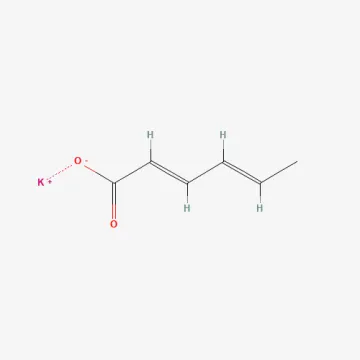
Potassium sorbate
Description
Mode of action
Potassium sorbate is a salt of sorbic acid classified as a contact fungicide with a pronounced antiseptic effect.
Its mode of action is based on inhibiting enzymatic processes within fungal pathogen cells, leading to a disruption of their metabolism.
The substance causes dehydration of the cytoplasm of fungal cells, suppressing the ability of microorganisms to reproduce and spread.
Upon contact with the plant surface, the active component alters the environmental pH, creating conditions unfavorable for the germination of fungal spores.
The product does not possess systemic properties, so its protective effect depends entirely on the thoroughness of leaf surface coverage during treatment.
What it targets
This fungicide is most effectively applied against a wide range of powdery mildew fungi that affect vegetable and fruit-berry crops.
Potassium sorbate demonstrates high activity against gray mold, various types of oidium, and downy mildew in vineyards when applied in a timely manner.
It is successfully used for the prevention of fungal infections in greenhouse farming, where high humidity facilitates the rapid development of mold fungi.
The agent also finds use as an auxiliary component for suppressing fungal colonies in fruit and vegetable storage facilities.
Regular use of potassium sorbate helps to significantly reduce the infectious background on the site, preventing the overwintering of pathogen spores.
Rates and timing
The application rates of the preparation vary depending on the level of crop infection and the biological characteristics of the plants being treated.
For preparing working solutions, concentrations from 0.5% to 1.5% are typically used, ensuring sufficient fungicidal activity with low phytotoxicity.
It is recommended to carry out treatments during periods of moderate temperatures, avoiding direct exposure to intense sunlight on the freshly applied solution.
The interval between sprayings ranges from 7 to 14 days, depending on weather conditions and the growth rate of the crop's vegetative mass.
The number of treatments is not strictly limited, although agronomists advise rotating the use of potassium sorbate with other fungicide groups to prevent resistance.
Restrictions
Potassium sorbate is considered a relatively safe compound, but standard individual protection measures must be followed when working with it.
It is not recommended to mix the preparation with highly alkaline compositions, as this may reduce the biological efficiency of the active ingredient.
During use, avoid contact of the concentrate with the mucous membranes of the eyes and respiratory organs, using a respirator and safety goggles during spraying.
The substance must be stored in a tightly closed package in a dry place, protected from moisture and direct sunlight to prevent decomposition.
It is important to consider that high concentrations of the working solution may cause short-term leaf burn, so dosage regulations must be strictly followed.
Status in the European Union
Not approved in the EU
- CAS number
- 24634-61-5
- Category (EU)
- FU - Fungicide
EU status is for reference only and does not replace national registration in your country.