
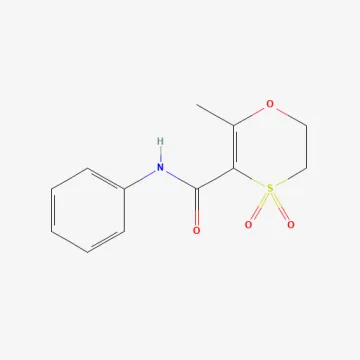
Oxycarboxin
Description
Mode of action
Oxycarboxin is a systemic fungicide belonging to the oxathiin chemical class. It is widely recognized for its specific activity against basidiomycete fungi, particularly those causing rust diseases.
The mode of action involves the inhibition of the succinate dehydrogenase enzyme in the fungal mitochondrial respiratory chain. By disrupting this energy production pathway, the fungicide halts mycelial growth and development.
Due to its systemic properties, oxycarboxin is absorbed by plant tissues and translocated via the xylem. This movement allows the fungicide to protect parts of the plant not directly covered during spraying.
The chemical exhibits both protective and curative properties. It is highly effective at stopping existing infections, especially when applied at the early stages of disease progression.
Oxycarboxin remains active within the plant for a period that provides a residual protective effect, reducing the frequency of applications required during the growing season.
What it targets
The primary target of oxycarboxin is the Uredinales order, commonly known as rust fungi. It is an essential tool for managing rust in cereal crops, legumes, and various ornamental plants.
Common diseases controlled include wheat leaf rust and carnation rust. It is particularly valued in greenhouse environments where rust can spread rapidly and cause significant economic damage to floral crops.
By effectively targeting the rust mycelium, the substance prevents the characteristic pustule formation and subsequent spore release, thereby limiting the secondary spread of the pathogen.
The use of oxycarboxin helps maintain the plant's health and vitality by preventing the premature senescence of leaves often caused by heavy rust infestations.
- Wheat rust (Puccinia spp.)
- Carnation rust (Uromyces caryophyllinus)
- Various ornamental rust diseases
Rates and timing
Application rates for oxycarboxin depend on the crop type, disease pressure, and the specific formulation used. Users should always consult the product label for recommended concentrations.
For field crops, it is recommended to apply the fungicide at the first sign of symptoms. Ensuring thorough coverage of both leaf surfaces is critical for optimal disease control results.
The number of applications per season is typically limited to prevent environmental accumulation and the development of fungal resistance. Standard practice involves 1–2 applications per season.
The timing of application should avoid periods of extreme heat or high wind, which can negatively affect the deposition and stability of the active ingredient on the plant surface.
Proper calibration of spraying equipment is essential to ensure that the required dosage is applied evenly, providing consistent protection across the entire field or greenhouse area.
Restrictions
Oxycarboxin should be handled with standard precautions for pesticides. Personal protective equipment, including gloves, goggles, and respiratory protection, is necessary during mixing and application.
Environmental safety is a priority; runoff into water bodies must be prevented as the substance can be harmful to aquatic life. Always maintain buffer zones near streams and ponds.
Compatibility with other pesticides should be verified before tank mixing. Avoid mixing with highly alkaline products that might degrade the active ingredient and reduce its efficacy.
To mitigate the risk of resistance development, it is highly recommended to alternate the use of oxycarboxin with fungicides that utilize different modes of action.
Adherence to pre-harvest intervals is mandatory. This ensures that residues in harvested crops are within acceptable safety limits established by local regulatory authorities.
Status in the European Union
Not approved in the EU
- CAS number
- 5259-88-1
- Category (EU)
- FU - Fungicide
EU status is for reference only and does not replace national registration in your country.