
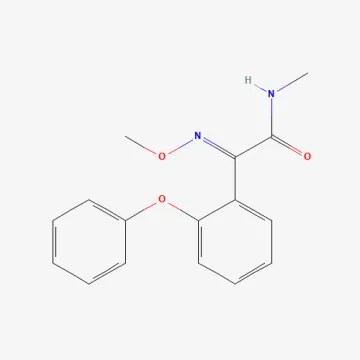
Metominostrobin
Description
Mode of action
Metominostrobin is a systemic fungicide belonging to the strobilurin class. It exhibits excellent translaminar movement, allowing the active ingredient to move effectively through the leaf tissue to provide thorough coverage and protection.
The primary mode of action is the inhibition of mitochondrial respiration in fungi. By blocking the electron transport at the cytochrome bc1 complex, it effectively cuts off the energy supply (ATP) required for the pathogen's survival and growth.
Metominostrobin provides both preventative and curative control. It is particularly effective at inhibiting spore germination and mycelial development, which are critical stages in the lifecycle of many plant pathogens.
Beyond its antifungal properties, the chemical exhibits a significant "greening" effect on treated plants. This physiological benefit helps delay senescence and maintains higher chlorophyll levels, ultimately supporting better crop yields.
The compound is known for its high rainfastness once the spray deposit has dried, ensuring long-lasting protection even in unstable weather conditions.
What it targets
Metominostrobin is primarily used to control a broad spectrum of fungal diseases including ascomycetes and basidiomycetes. It is widely recognized for its efficacy against rusts, mildews, and various leaf spots.
It is commonly applied to a wide range of crops, including cereals, rice, soybeans, and various vegetable crops, providing a robust defense against yield-robbing pathogens.
- Powdery mildew.
- Rust diseases (leaf and stem).
- Septoria leaf blotch.
- Rice blast.
- Alternaria leaf spots.
Rates and timing
Application rates for Metominostrobin typically range from 200 to 600 grams of active ingredient per hectare, depending on the crop type, disease pressure, and regional agricultural practices.
The timing of application should be scheduled at the first signs of disease appearance or as a preventive measure during periods of high infection risk. Consistent coverage is essential to maximize biological efficacy.
Restrictions
To prevent the development of resistance, Metominostrobin should not be used repeatedly in the same season. It is recommended to rotate it with fungicides from different chemical families, such as triazoles or SDHI fungicides.
Operators must adhere to strict safety measures during application, including the use of protective gear. The substance poses risks to aquatic organisms, so appropriate buffer zones must be maintained near water bodies.
Status in the European Union
Not approved in the EU
- CAS number
- 133408-50-1
- Category (EU)
- FU - Fungicide
EU status is for reference only and does not replace national registration in your country.