
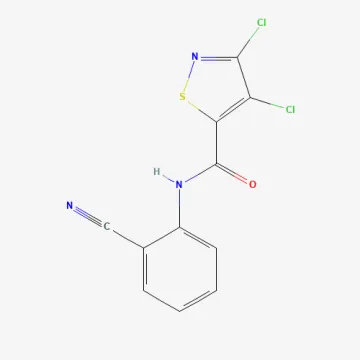
Isotianil
Description
Mode of action
Isotianil belongs to the isothiazole chemical class and functions as a systemic fungicide with a unique mode of action. It acts primarily as an inducer of Systemic Acquired Resistance (SAR) in plants.
Unlike conventional contact fungicides, isotianil does not have direct toxic effects on pathogens. Instead, it activates the plant's endogenous defense genes, leading to the production of defensive proteins that protect the plant from infection.
Due to its systemic properties, isotianil is absorbed by the roots or leaves and translocated throughout the plant. This provides comprehensive protection to both existing and new growth for an extended period.
By boosting the plant's own immunity, isotianil serves as a valuable tool for managing pathogen resistance, making it difficult for fungi to overcome the activated defense mechanisms.
The substance exhibits high stability within plant tissues, ensuring consistent and long-lasting protection against various fungal threats throughout the critical growth stages.
What it targets
The primary use of isotianil is the protection of rice crops against major fungal diseases. It is particularly effective against rice blast (Magnaporthe oryzae), which is one of the most destructive diseases in rice production globally.
Isotianil also demonstrates efficacy against sheath blight, helping to minimize crop damage and maintain the quality of the harvested grain. It supports overall crop health and vigor.
Furthermore, the compound effectively suppresses various types of leaf spots, preventing them from spreading under high humidity conditions which are favorable for fungal development.
Its broad-spectrum efficacy makes it a versatile solution for integrated pest management (IPM) programs, used both preventatively and upon the initial detection of disease symptoms.
By reducing the impact of diseases, isotianil helps stabilize crop yields and improves the resilience of rice plants to various abiotic and biotic stresses during the season.
Rates and timing
The application rates for isotianil depend on the specific formulation, the method of application (seed treatment, soil drenching, or foliar spray), and the specific crop requirements.
For soil or seed treatments, uniform distribution is essential to ensure that the plant absorbs the active ingredient early enough to trigger the defense response effectively.
Timing of foliar applications is synchronized with the growth stages of the rice crop. Preventive use is generally recommended to allow the plant sufficient time to express its defense genes before high pathogen pressure occurs.
Agronomists should consult local field labels to adjust rates according to environmental conditions and the intensity of the disease risk in their specific geographic location.
Careful calculation of dosages is required to ensure that the plant receives an optimal amount of the substance to achieve the intended physiological effect without causing any negative impact on growth.
Restrictions
Safety is a priority when handling isotianil. Personnel must use appropriate personal protective equipment (PPE), including gloves, respiratory protection, and protective eyewear to minimize exposure.
Storage should be in cool, dry, and well-ventilated areas, strictly separated from food, animal feed, and water supplies. Proper containment is necessary to prevent any accidental leakage into the environment.
When preparing spray solutions, it is crucial to avoid contamination of water bodies, especially near irrigated rice fields. Strict adherence to buffer zones is recommended.
All safety intervals and pre-harvest intervals (PHI) specified on the product label must be followed to ensure the final product meets international safety standards for food consumption.
- Wear suitable PPE during all stages of handling and application.
- Avoid spraying in conditions that may lead to chemical drift.
- Check compatibility with other pesticides before preparing tank mixtures.
- Properly dispose of chemical containers according to local environmental regulations.
Status in the European Union
Not approved in the EU
- CAS number
- 224049-04-1
- Category (EU)
- FU - Fungicide
EU status is for reference only and does not replace national registration in your country.