
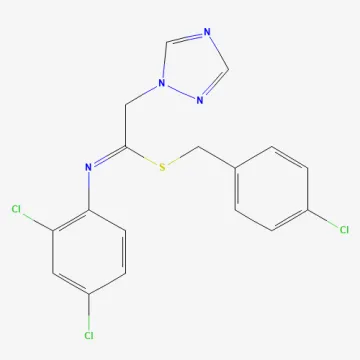
Imibenconazole
Description
Mode of action
Imibenconazole belongs to the triazole chemical class, which function as potent inhibitors of ergosterol biosynthesis. It is a systemic active ingredient, capable of penetrating plant tissues and being transported acropetally to protect new growth.
The mechanism of action involves blocking the 14-alpha-demethylase enzyme, which is essential for fungal pathogens to construct their cell membranes. The inhibition of this process leads to the suppression of mycelial growth and subsequent death of the pathogen.
Due to its systemic properties, the substance offers both protective and curative action. It can effectively suppress early-stage infections, preventing the establishment of fungal colonies on the surface of leaves and fruit.
Formulations based on this compound are known for their high resistance to rain wash-off, which is crucial during spring seasons with frequent rainfall. This extended residual protection helps optimize the frequency of applications.
The compound is compatible with various modern insecticides and fungicides, allowing it to be included in tank mixtures for comprehensive protection programs in orchards.
What it targets
The primary use of imibenconazole is on pome fruit crops, particularly apples and pears. It exhibits high efficacy against a broad spectrum of phytopathogens that affect commercial orchards.
The main objective is to control scab (Venturia inaequalis). This disease is highly destructive and can significantly reduce the market value and yield of fruit if left unmanaged during the growing season.
The substance is also highly effective against powdery mildew. This disease affects leaves and inflorescences, leading to distorted shoots and a general decline in the tree's productivity.
Imibenconazole is also used to manage various leaf spot diseases that cause premature defoliation. Protecting the foliage allows the tree to maintain photosynthesis, ensuring better winter hardiness and bud formation.
- Apple and pear scab
- Powdery mildew
- Leaf spot diseases
- Fruit fungal infections
Rates and timing
Application timing is strictly linked to the phenological stages of fruit trees. Initial sprays are typically scheduled during the green tip or pink bud stages to prevent primary infection.
The application rate depends on the age of the orchard and the density of the canopy. Standard concentrations are recommended to ensure thorough coverage of all vegetative parts, including the inner canopy layers.
Intervals between applications generally range from 10 to 14 days, depending on environmental conditions and disease pressure. During periods of high humidity and risk, these intervals may be adjusted.
Achieving uniform coverage is essential for optimal biological efficacy. Utilizing high-quality spraying equipment ensures that the active substance is evenly distributed across the fruit and foliage surfaces.
Following the prescribed application guidelines ensures high performance and prevents the accumulation of residues, meeting strict safety standards for agricultural produce.
Restrictions
The use of imibenconazole requires adherence to standard safety measures when handling pesticides. Proper personal protective equipment, such as respirators and gloves, must be worn during preparation and spraying.
Spraying should be avoided during windy conditions to prevent drift, or when bees are actively foraging. Despite having moderate toxicity to beneficial insects, direct contact should be strictly minimized.
To avoid the development of pathogen resistance, it is critical to rotate imibenconazole with fungicides of different chemical classes. Limiting the number of applications per season is a best practice in IPM.
Disposal of remaining spray solution and equipment rinsing must comply with local environmental regulations. Never discharge residues into waterways or public drainage systems.
Pre-harvest intervals (PHI) must be strictly observed to ensure the safety of the final product for consumers. These periods vary by crop and must be checked on the product label.
Status in the European Union
Not approved in the EU
- CAS number
- 86598-92-7
- Category (EU)
- FU - Fungicide
EU status is for reference only and does not replace national registration in your country.