
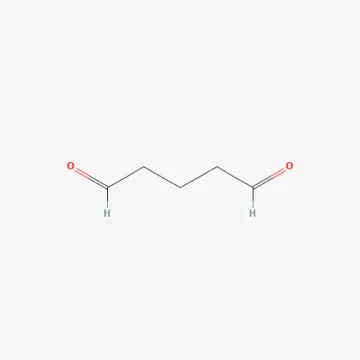
Glutaraldehyde
Description
Mode of action
Glutaraldehyde belongs to the class of saturated aliphatic dialdehydes and acts as a highly effective broad-spectrum biocide. It is widely recognized in agriculture not as a traditional herbicide, but as a potent disinfectant and sanitizer.
The primary mechanism of action involves the cross-linking of protein molecules, enzymes, and nucleic acids within the microbial cells. This interaction causes rapid denaturation and irreversible damage to cell walls and internal structures.
The compound displays remarkable efficacy against a wide range of microorganisms, including bacteria, viruses, and fungal spores, even in the presence of organic debris.
Its ability to remain active across a broad pH range makes it a versatile solution for managing complex hygiene issues within intensive farming environments and glasshouses.
By preventing the formation of biofilms in water systems and on surfaces, glutaraldehyde provides a sustained protective environment that discourages the resurgence of pathogenic populations.
What it targets
In agricultural practice, glutaraldehyde is primarily utilized for the disinfection of greenhouse structures, irrigation systems, storage containers, and horticultural tools.
It is specifically effective in controlling phytopathogenic bacteria that cause vascular wilts, as well as various fungi that thrive in humid environments, such as powdery mildew and mold species.
The agent is crucial for cleaning drip irrigation lines, effectively removing bacterial slime and algal blooms that can impede water flow and harbor plant pathogens.
It also plays a vital role in preventing cross-contamination during plant propagation by sanitizing equipment used for pruning, grafting, and other manual operations.
- Pathogenic bacteria (including Gram-positive and Gram-negative)
- Fungal spores and oomycetes
- Plant viruses on surfaces and tools
- Biofilm-forming microorganisms in irrigation pipes
Rates and timing
The concentration of glutaraldehyde used in agriculture is determined by the specific hygiene requirements and the intensity of the target pathogen population.
For routine disinfection of greenhouse surfaces, concentrations typically range from 0.1% to 0.5%, applied via spraying to ensure complete surface coverage.
In scenarios requiring heavy-duty sanitation, such as post-harvest deep cleaning of irrigation networks or facilities with high infection pressure, concentrations of 1-2% are recommended.
Adequate contact time is essential for the effectiveness of the biocide, often requiring a dwell time of several minutes to hours depending on the application site.
It is standard procedure to flush irrigation lines with clean water after the exposure period to ensure no chemical residues remain that could impact subsequent plant growth.
Restrictions
Glutaraldehyde is a hazardous substance that requires rigorous safety protocols to prevent adverse health effects during handling and application.
Operators must wear appropriate personal protective equipment, including respirators, chemical-resistant gloves, and goggles, to avoid irritation of the skin, eyes, and respiratory tract.
The substance is not intended for direct application to living plants or soil, as its strong oxidative properties can cause severe phytotoxicity and damage to delicate plant tissues.
Proper ventilation of treated areas is mandatory after the disinfection process to ensure that airborne residues are cleared before workers re-enter the facility.
Users should also be aware of the potential for corrosion on specific metals and should thoroughly rinse treated tools to preserve their structural integrity over time.
Status in the European Union
Not approved in the EU
- CAS number
- 111-30-8
- Category (EU)
- FU - Fungicide
EU status is for reference only and does not replace national registration in your country.