
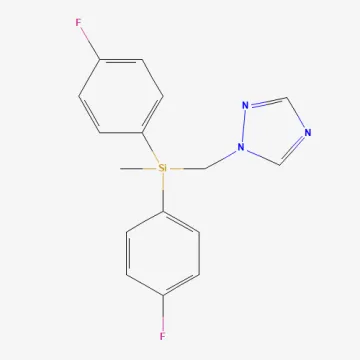
Flusilazole
Description
Mode of action
Flusilazole belongs to the triazole chemical class. It is a systemic fungicide with a pronounced preventive and curative effect, possessing high penetration speed into plant tissues.
The substance's mode of action is based on inhibiting the biosynthesis process of ergosterol in fungal pathogen cells. Disrupting the synthesis of this critical cell membrane component leads to rapid mycelium death and halts spore development.
The product moves rapidly through the plant's vascular system (acropetally), providing protection even for parts of the culture that were not directly hit during spraying.
Due to high lipophilicity, the substance is resistant to washing off by rain, allowing it to maintain a protective effect for a long period after application.
The fungicide's action is characterized by a long half-life within the plant, providing prolonged protection for new growth and young leaves.
What it targets
Flusilazole effectively suppresses a wide spectrum of fungal disease pathogens from the Ascomycota, Basidiomycota, and Deuteromycota classes.
It is successfully applied against powdery mildew, various types of rust, septoria, leaf spots, and Fusarium head blight.
The product demonstrates high biological activity against scab in fruit crops, making it in high demand for intensive orchard management.
Additionally, the substance suppresses the development of eyespot and other root rot diseases in cereal crops.
- Powdery mildew (Erysiphaceae)
- Brown and stem rust (Puccinia spp.)
- Septoria (Septoria spp.)
- Apple scab (Venturia inaequalis)
- Fusarium (Fusarium spp.)
Rates and timing
Flusilazole application rates depend on the crop, the severity of the infection, and regional climatic conditions. On average, the concentration of the active substance in the working solution varies from 50 to 150 grams per hectare.
Spraying is recommended during the vegetation period at the first signs of disease or for preventive purposes when conditions favor pathogen development.
The number of applications per season is usually limited to two or three to avoid the development of resistance in fungal populations.
To prepare the working solution, it is necessary to calibrate the sprayer thoroughly, ensuring uniform coverage of the leaf surface area.
It is important to observe the intervals between the last application and harvest, as regulated by local sanitary standards.
Restrictions
It is not recommended to apply flusilazole more than twice in succession on the same area to avoid pathogen resistance to the active substance.
The product should be stored in dry, well-ventilated storage rooms, excluding exposure to direct sunlight and freezing temperatures.
When working, it is necessary to use personal protective equipment, such as respirators, gloves, and safety goggles, to prevent the concentrate from contacting skin or mucous membranes.
Disposal of product containers must be carried out in accordance with legal requirements for handling hazardous waste.
Processing near water bodies and apiaries is prohibited due to potential danger to aquatic organisms and beneficial insects if application regulations are violated.
Status in the European Union
Not approved in the EU
- CAS number
- 85509-19-9
- Category (EU)
- FU - Fungicide
- ADI
- 0.002 mg/kg bw/day
- ARfD
- 0.005 mg/kg bw
- AOEL
- 0.005 mg/kg bw/day
EU status is for reference only and does not replace national registration in your country.