
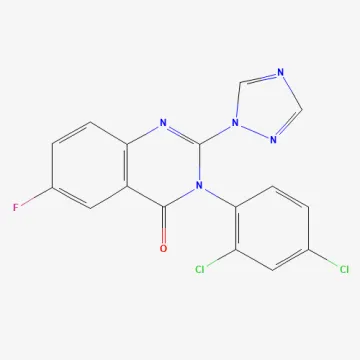
Fluquinconazole
Description
Mode of action
Fluquinconazole belongs to the triazole chemical class and acts as a systemic fungicide with a broad spectrum of activity. It inhibits fungal growth by blocking the biosynthesis of ergosterol, which is vital for building fungal cell membranes.
Within the plant, the substance exhibits translaminar and systemic movement, quickly translocating through tissues. This provides protection not only to treated areas but also to new growth emerging after the application.
The product is characterized by strong curative, preventive, and eradicant properties. Due to its high mobility in plant tissues, it effectively halts mycelial development even after the initial infection has occurred.
Fluquinconazole is distinguished by high residual activity, which allows for extended protection of crops against secondary infections. This is particularly crucial during stages of intensive crop growth.
Its mode of action enables the product to effectively mitigate the risk of pathogen resistance when integrated into comprehensive crop protection programs.
What it targets
This active ingredient is designed to combat a wide range of fungal diseases. Its primary targets include pathogens responsible for powdery mildew, rusts, and various leaf spot diseases.
The product demonstrates high biological efficacy against Septoria leaf and glume blotch, which is critical for preserving wheat yield potential.
Fluquinconazole effectively suppresses the development of Helminthosporium and various spot diseases that affect cereal crops throughout the entire vegetation period.
In addition to protecting vegetative organs, the substance is actively used for seed treatment to combat seed-borne and soil-borne diseases.
- Rust (brown, stem, yellow)
- Septoria
- Powdery mildew
- Helminthosporium
- Fusarium root rot
Rates and timing
Application rates for fluquinconazole depend directly on the phytosanitary situation, crop type, and the growth stage of the pathogen. On average, the dosage ranges from 0.5 to 1.5 liters of the formulated product per hectare.
The timing of applications is determined by disease forecasting and field monitoring. Optimal results are achieved when applied at the first signs of disease symptoms.
When used as a seed treatment, the dosage is calculated based on the seed mass, ensuring reliable protection of seedlings against early-season infections.
The number of applications per season is typically limited to two to avoid accumulation of the active substance and to minimize the risk of pathogen resistance.
It is essential to ensure uniform coverage of the leaf surface with the spray solution. The optimal spray volume is 200–300 liters per hectare for adequate crop coverage.
Restrictions
Standard personal protective equipment must be used when handling fluquinconazole. The substance is considered moderately hazardous, so contact with skin and mucous membranes should be strictly avoided.
Application is not recommended during windy weather to prevent spray drift onto neighboring crops or water bodies.
Observing pre-harvest intervals is a mandatory requirement. The period between the final application and harvest is usually at least 30–40 days.
The substance may exhibit toxicity to certain aquatic organisms; therefore, spraying in the immediate vicinity of fish-bearing water bodies is strictly prohibited.
The product should be stored in its original, tightly sealed packaging away from food, feed, and in areas inaccessible to children and pets.
Status in the European Union
Not approved in the EU
- CAS number
- 136426-54-5
- Category (EU)
- FU - Fungicide
- Approved from
- 01.01.2012
- Approval until
- 31.12.2021
- ADI
- 0.002 mg/kg bw/day
- ARfD
- 0.02 mg/kg bw
- AOEL
- 0.001 mg/kg bw/day
EU status is for reference only and does not replace national registration in your country.