
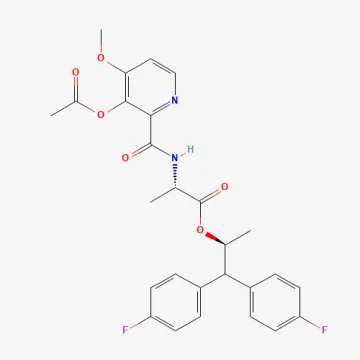
Florylpicoxamid
Description
Mode of action
Florpyrauxifen-benzyl is an advanced active ingredient belonging to the novel chemical class of picolinates. It functions as a systemic herbicide that mimics natural plant growth hormones (auxins), leading to uncontrolled growth and death in susceptible weed species.
The mode of action involves disrupting metabolic processes in the meristematic tissues of plants. Once absorbed, the active substance translocates rapidly through the phloem and xylem to the growing points, causing abnormal cellular proliferation.
The herbicidal effect manifests as twisting of stems and leaves, chlorosis, and subsequent necrosis of tissues. The weed loses its ability to photosynthesize and absorb nutrients, eventually leading to plant collapse.
A key advantage of florpyrauxifen-benzyl is its performance across a wide temperature range, ensuring high efficacy even in cool early-season conditions. This stability makes it a reliable component in integrated weed management programs.
The substance exhibits high selectivity, allowing for its safe application on specific cereal crops without damaging the plants, provided that the recommended dosage and timing are followed.
What it targets
Florpyrauxifen-benzyl is designed to control a broad spectrum of broadleaf weeds, including species that have developed resistance to other common herbicide classes used in cereal production.
Primary targets include weeds from the Asteraceae, Solanaceae, and Fabaceae families, which are major competitors for resources like sunlight and water in field crops.
The herbicide is highly effective against challenging weeds such as cleavers, common lambsquarters, various thistle species, and ragweed, helping to reduce their overall pressure in the field.
Due to its systemic nature, it effectively reaches the root systems of perennial weeds, preventing regrowth and ensuring long-term control of invasive plant populations.
- Galium aparine (Cleavers)
- Chenopodium album (Lambsquarters)
- Cirsium arvense (Canada thistle)
- Ambrosia artemisiifolia (Common ragweed)
- Centaurea cyanus (Cornflower)
Rates and timing
The application rates for florpyrauxifen-benzyl depend on the target weed spectrum, the growth stage of the crop, and environmental conditions. Early application at the initial stages of weed development is recommended for optimal results.
For cereal crops, application typically occurs from the tillering stage up to the second node stage. It is crucial to treat weeds while they are still young to maximize biological activity and efficacy.
Achieving uniform coverage is essential for performance. The use of appropriate adjuvants can improve the penetration of the active ingredient through the weed's waxy cuticle, enhancing the speed of control.
Agronomists should strictly adhere to the manufacturer's label instructions regarding dosage and frequency of application to avoid phytotoxicity and ensure crop safety.
Modern application equipment with correctly calibrated nozzles is required to ensure consistent delivery and uniform distribution across the entire field area.
Restrictions
Florpyrauxifen-benzyl performance can be affected by extreme environmental conditions. While it is stable in various climates, very low temperatures may slow the development of visual symptoms.
Drift management is critical; the herbicide is highly active at low doses, and off-target spray drift can cause significant damage to sensitive crops like vegetables, legumes, or specialty crops nearby.
Operators must wear appropriate personal protective equipment (PPE), including gloves, long-sleeved clothing, and eye protection, when handling the concentrated or diluted product.
Equipment must be thoroughly cleaned with appropriate decontaminants after use to prevent cross-contamination when switching to other pesticides or crops.
Store the product in its original container in a cool, dry, and well-ventilated area, away from direct sunlight, food products, and out of reach of children and unauthorized personnel.
Status in the European Union
Pending
- CAS number
- 1961312-55-9
- Category (EU)
- FU - Fungicide
EU status is for reference only and does not replace national registration in your country.