
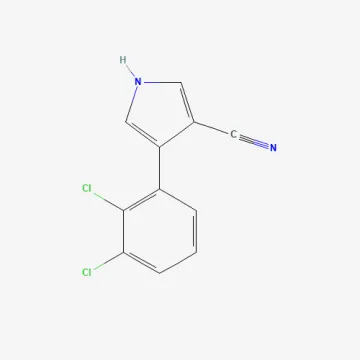
Fenpiclonil
Description
Mode of action
Fenpiclonil belongs to the phenylpyrrole class of fungicides. It is a contact-acting active ingredient primarily utilized for the protection of seeds and seedlings.
The mechanism of action involves the disruption of osmotic regulation within fungal cells. By inhibiting the transport of glucose phosphorylation, the compound halts mycelial growth.
Acting as a contact barrier, Fenpiclonil effectively protects the seed surface from soil-borne pathogens. It provides a long-lasting residual effect in the rhizosphere environment.
As a non-systemic fungicide, it does not translocate within the plant tissues, which makes it an excellent candidate for resistance management strategies.
The compound demonstrates high stability on the seed coat, maintaining its antifungal efficacy even under challenging soil moisture and temperature conditions.
What it targets
Fenpiclonil is specifically targeted at controlling seed-borne and soil-borne fungal diseases affecting various cereal crops, including wheat and barley.
It is highly effective against various smut diseases (Ustilago spp.) and significantly reduces the incidence of Fusarium-induced root rots.
The fungicide also provides substantial protection against seed decay caused by diverse fungal species, including molds that can compromise germination rates.
By controlling early-season infections, the active ingredient ensures better crop establishment and healthier development of the root system.
The application of Fenpiclonil helps mitigate the risks associated with high pathogen pressure in the soil, preventing crop losses during the early germination stages.
Rates and timing
The application of Fenpiclonil is carried out exclusively as a seed treatment process using industrial-grade seed treatment machinery to ensure uniform coverage.
Dosage rates are strictly defined by the manufacturer's label and depend on the crop type, seed weight, and the predicted level of pathogen infection in the planting area.
Consistent and thorough application is required to ensure that every seed is fully coated, providing the necessary protection during the initial growth phase.
It is recommended to allow the treated seeds to dry properly before storage to maintain the integrity of the seed coat and the effectiveness of the fungicide.
When mixing with other seed treatment agents, a compatibility test is essential to ensure that the stability of the suspension is maintained without clogging equipment.
Restrictions
Because Fenpiclonil acts primarily through contact, it does not provide systemic protection to the newly emerged foliage or developing stems during the later growth stages.
Personnel handling the chemical must utilize appropriate personal protective equipment (PPE) to avoid dermal contact or inhalation of fine particles.
Treated seed is strictly prohibited from being used for human consumption or animal feed and must be clearly labeled to prevent accidental mixing with grain supplies.
Storage of the fungicide must be conducted in original containers within secure, climate-controlled environments, away from food and animal feed storage areas.
Environmental responsibility is critical, and all disposal of chemical containers and unused residues must comply with local regulations for hazardous agricultural materials.
Status in the European Union
Not approved in the EU
- CAS number
- 74738-17-3
- Category (EU)
- FU - Fungicide
EU status is for reference only and does not replace national registration in your country.