
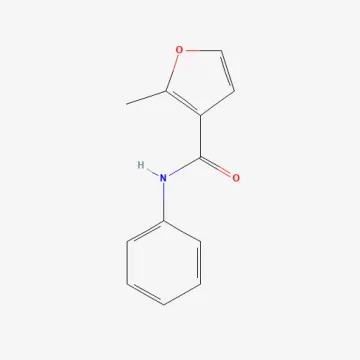
Fenfuram
Description
Mode of action
Fenfuram belongs to the anilide chemical class, specifically derived from furancarboxylic acid. It is a systemic fungicide known for its protective and curative properties when applied as a seed treatment.
The biological mode of action involves the inhibition of the succinate oxidation process within the Krebs cycle of pathogenic fungi. The substance effectively blocks the enzyme succinate dehydrogenase, causing a disruption in the energy metabolism of fungal cells.
Fenfuram is rapidly absorbed by seeds and seedlings, providing long-lasting protection against pathogens that reside both on the seed surface and within the internal tissues.
The substance is characterized by high selectivity. It effectively targets specific groups of pathogens while ensuring no phytotoxic effects on the emerging seedlings of agricultural crops.
Under field conditions, Fenfuram exhibits significant resistance to washing off by rainfall, which is essential for protecting young plants during the germination period in moist soil environments.
What it targets
Fenfuram is a specialized fungicide primarily used for controlling smut diseases in cereal crops. Its main function is to eliminate infectious agents transmitted through seed material.
The substance demonstrates superior efficacy in controlling common bunt in wheat and loose smut in barley.
Furthermore, it suppresses other pathogens responsible for root rot diseases, such as Fusarium and Helminthosporium species, provided the infection is seed-borne.
- Wheat common bunt (Tilletia caries)
- Barley loose smut (Ustilago nuda)
- Helminthosporium root rot (Bipolaris sorokiniana)
- Fusarium root rot (Fusarium spp.)
The use of Fenfuram significantly reduces crop damage during the early vegetative stages, which is crucial for establishing optimal plant density in the field.
Rates and timing
Application of Fenfuram is carried out via seed treatment before sowing. Uniform coverage of the seeds is vital to ensure maximum fungicidal efficacy.
The dosage rates vary depending on the product formulation and the specific target disease, typically ranging from 0.5 to 1.5 liters per ton of seeds.
Treatment can be conducted immediately before sowing or well in advance, provided the treated seeds are stored in a cool and dry location.
It is essential to use seeds that are free from dust and debris to ensure optimal adhesion of the active ingredient and consistent distribution of the chemical.
When preparing tank mixes, it is important to verify the chemical compatibility of Fenfuram with other fungicides or insecticides to prevent potential product degradation.
Restrictions
Fenfuram is classified as a moderately toxic compound. Personal protective equipment, including respirators, gloves, and protective eyewear, is mandatory during handling and application.
Treated seeds must not be used for food, feed, or oil production. Proper disposal of leftover chemicals and packaging is required according to local environmental regulations.
Prevent any runoff of the product into open water bodies or sewer systems, as it may pose risks to aquatic ecosystems.
Storage of the product must take place in its original packaging within facilities designed for pesticide storage, ensuring no access by children or livestock.
Agronomists should strictly adhere to established application protocols to ensure safe and effective use of the fungicide on target cereal crops.
Status in the European Union
Not approved in the EU
- CAS number
- 24691-80-3
- Category (EU)
- FU - Fungicide
EU status is for reference only and does not replace national registration in your country.