
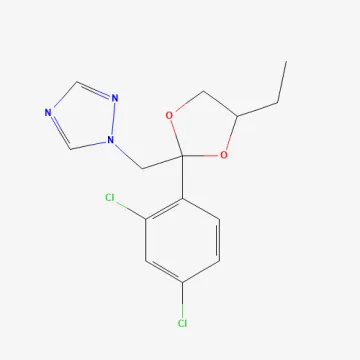
Etaconazole
Description
Mode of action
Etaconazole is a well-known member of the triazole chemical group, functioning primarily as a systemic fungicide. Its molecular structure allows it to move within the plant tissue after application, protecting both established foliage and newly emerging leaves from fungal infection.
The primary mode of action is the inhibition of ergosterol biosynthesis, a critical component of fungal cell membranes. By disrupting this process, etaconazole prevents the fungus from maintaining its structure, ultimately leading to the inhibition of mycelial growth and pathogen death.
This substance exhibits both preventive and curative properties. It is highly effective at stopping the progression of active fungal infections if applied promptly after the initial appearance of symptoms, which helps minimize economic losses in agricultural production.
Due to its systemic nature, etaconazole is relatively resistant to being washed off by moderate rain soon after the spray has dried. This provides a level of reliability for farmers operating in unpredictable weather environments.
To ensure long-term efficacy, it is highly recommended to integrate etaconazole into a broader pest management strategy. Rotating its use with other fungicide classes is essential to delay or prevent the development of resistance among fungal populations.
What it targets
Etaconazole is used to combat a wide variety of fungal pathogens that affect global crops. It is particularly effective against powdery mildew, rusts, leaf spots, and other basidiomycete and ascomycete infections.
Its broad-spectrum activity makes it a valuable tool in protecting cereals, fruits, and vegetables from diseases that thrive under high-moisture conditions or high-density planting regimes.
Rates and timing
Application rates are typically defined by the specific label of the formulated product and depend on the susceptibility of the crop and the disease severity at the time of treatment. Consistent calibration of spray equipment is crucial for achieving uniform coverage.
Timing the application is critical for success; preventative treatments are generally more cost-effective. However, curative applications must occur as soon as the disease threshold is crossed to prevent significant damage.
Restrictions
Safety is paramount when handling chemical fungicides. All operators must wear appropriate personal protective equipment (PPE) and strictly follow the safety instructions provided on the packaging regarding handling, mixing, and storage.
Environmental mitigation measures should be strictly observed to prevent drift into non-target areas or water bodies. Disposal of empty containers and leftover spray solutions must comply with local environmental regulations to protect surrounding ecosystems.
Status in the European Union
Not approved in the EU
- CAS number
- 60207-93-4
- Category (EU)
- FU - Fungicide
EU status is for reference only and does not replace national registration in your country.