
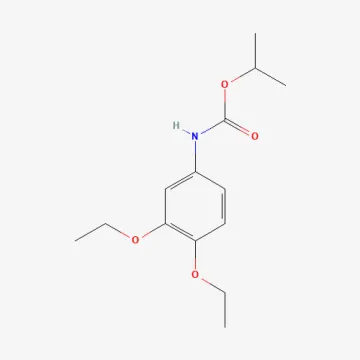
Diethofencarb
Description
Mode of action
Diethofencarb is a highly specific fungicide belonging to the carbamate chemical class. It is primarily designed to combat fungal diseases, particularly those that have developed resistance to benzimidazole fungicides.
The mechanism of action of this substance involves inhibiting the cell division of the pathogen. Diethofencarb blocks beta-tubulin synthesis, which effectively halts mycelial growth and prevents the spread of fungal spores on treated crops.
A significant characteristic of this compound is its property of "negative cross-resistance." This implies that pathogens which have already developed resistance to benzimidazole-based chemicals show increased sensitivity to diethofencarb treatment.
The substance possesses systemic properties, enabling it to penetrate plant tissues and provide protection not only to the surfaces directly sprayed but also to emerging plant parts during the active growth phase.
This fungicide is commonly used in formulated mixtures, which expands the spectrum of its activity and minimizes the risks associated with the development of secondary resistance in harmful organisms.
What it targets
The primary target for diethofencarb application is grey mold (Botrytis cinerea), which causes substantial economic losses in the production of various vegetable, fruit, and berry crops.
The preparation demonstrates high biological efficacy against a complex of rot-causing fungi that thrive under conditions of high humidity, particularly in greenhouse environments.
Applications are most frequently directed at crops such as grapes, tomatoes, cucumbers, and strawberries. Using this substance significantly reduces harvest losses caused by fruit decay and necrosis.
The active ingredient is also effective in suppressing mycelial growth during early infection stages, making it a valuable tool in preventative crop protection programs.
- Grapevines (against grey mold).
- Vegetable crops in open and protected ground.
- Berry bushes and strawberries.
Rates and timing
The timing of diethofencarb application is tied to the phenological stages of crop development and the onset of disease outbreaks. Preventive treatments are conducted before visible symptoms appear.
Application rates depend on the specific formulation and the number of treatments recommended by the manufacturer. Typically, 2-3 sequential applications with a 10-14 day interval are required.
Ensuring uniform coverage of leaf surfaces and fruits with the working solution is crucial, as diethofencarb must be present in the potential infection zone to effectively stop fungal spore development.
When working in greenhouse conditions, it is necessary to consider the microclimate, as high humidity may require adjustments in solution concentration to achieve optimal results.
In tank mixtures, diethofencarb is compatible with other fungicides, allowing it to serve as a cornerstone for anti-resistance management programs in intensive horticulture.
Restrictions
The main limitation when working with diethofencarb is the requirement to strictly observe pre-harvest intervals to ensure that no pesticide residues remain in the marketed produce.
The product should be stored in its original packaging, away from food and animal feed. Handling requires the use of personal protective equipment for the skin, eyes, and respiratory tract.
Avoid applying the product shortly before expected rainfall or during strong winds, as this decreases efficacy and increases the risk of environmental contamination of surrounding areas.
To prevent the development of pathogen tolerance, do not rely solely on diethofencarb throughout the season; rotation with fungicides from different chemical classes is essential.
Disposal of empty containers and unused solution must comply with local environmental regulations. Prevent the product from entering water bodies or sewage systems.
Status in the European Union
Not approved in the EU
- CAS number
- 87130-20-9
- Category (EU)
- FU - Fungicide
- Approved from
- 01.06.2011
- Approval until
- 31.05.2021
- ADI
- 0.43 mg/kg bw/day
- ARfD
- Not appl.
- AOEL
- 0.5 mg/kg bw/day
EU status is for reference only and does not replace national registration in your country.