
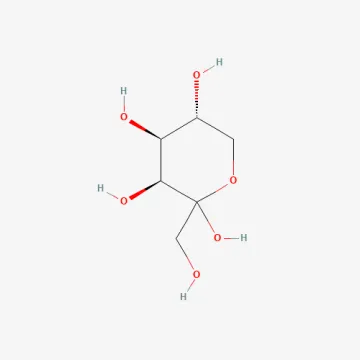
D-tagatose
Description
Mode of action
D-tagatose is a naturally occurring monosaccharide that functions as a sustainable biopesticide, offering a modern alternative to synthetic plant protection products.
Its mode of action involves the targeted disruption of metabolic pathways in specific pathogens and weeds, leading to a significant reduction in their competitive ability.
By interfering with the cellular physiology of weeds, D-tagatose inhibits root development and nutrient uptake, effectively arresting the growth of unwanted vegetation.
The substance also exhibits antifungal properties, creating an unfavorable environment for spore germination and mycelial expansion on leaf surfaces.
As a biological agent, it interacts minimally with the environment, degrading naturally into harmless components and supporting ecological balance in agroecosystems.
What it targets
D-tagatose is primarily utilized to suppress the emergence and early growth of invasive weed species in agricultural fields and nurseries.
It is effective against various fungal pathogens, specifically those causing powdery mildew, which are common threats to horticultural crops.
The agent provides protection against certain bacterial infections that affect leafy greens and other sensitive vegetable crops during the growing season.
Research indicates potential in managing specific pest populations by disrupting their feeding activity and digestion upon contact with treated plant tissues.
Its use is increasingly popular in integrated pest management (IPM) systems, where reducing reliance on traditional chemical herbicides is a priority.
Rates and timing
Application rates for D-tagatose are carefully calibrated based on the targeted weed species and the growth stage of the primary crop being treated.
Timing is critical, with the most successful applications occurring during the early vegetative stages of weeds to maximize the physiological impact of the sugar-based treatment.
Equipment calibration is essential to ensure uniform coverage, as the effectiveness of the treatment depends heavily on the thorough contact of the active ingredient.
For preventative fungal control, a structured schedule of applications should be followed, typically separated by 10 to 14-day intervals depending on disease pressure.
Proper water quality and pH adjustment of the tank mix are necessary to maintain the structural integrity and efficacy of the monosaccharide molecule.
Restrictions
Effectiveness is highly dependent on environmental conditions, particularly sunlight and humidity, which can alter the speed of absorption and reaction.
Storage requires strict adherence to climate-controlled conditions to prevent the degradation of the sugar-based active ingredient by ambient microflora.
Avoid applying during the full bloom phase of sensitive crops to ensure that the treatment does not negatively affect pollination or flower development.
Compatibility testing is mandatory before mixing D-tagatose with other pesticides to avoid antagonistic effects that could neutralize its biocidal activity.
Although safe to handle, standard precautions including gloves and eye protection are recommended during the preparation of concentrated application solutions.
Status in the European Union
Pending
- CAS number
- 87-81-0
- Category (EU)
- FU - Fungicide
EU status is for reference only and does not replace national registration in your country.