
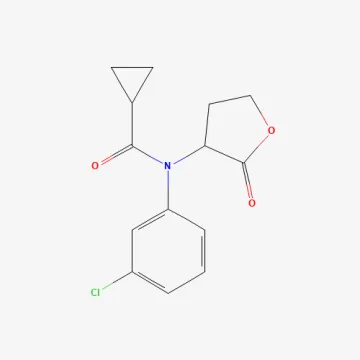
Cyprofuram
Description
Mode of action
Cyprofuram is a systemic fungicide belonging to the acylalanine chemical group. It is recognized for its ability to be absorbed by plant tissues and translocated throughout the organism, providing both protective and curative action.
The primary mechanism of action involves the inhibition of ribosomal RNA synthesis in susceptible fungal pathogens. This specific metabolic interference leads to the cessation of mycelial growth and effectively prevents spore development.
Due to its systemic nature, the active ingredient provides excellent protection for new plant growth, provided that the initial application was timed correctly during the vegetative development phase.
In agricultural practice, cyprofuram is frequently incorporated into multi-component formulations. These mixtures leverage synergistic effects to broaden the control spectrum and delay the onset of pathogen resistance.
The chemical stability of cyprofuram within the plant ensures prolonged protection, effectively suppressing the disease progression even under conditions favorable for fungal outbreaks.
What it targets
Cyprofuram is primarily utilized to combat plant diseases caused by oomycetes. These pathogens are responsible for significant yield losses in diverse agricultural and horticultural sectors worldwide.
The fungicide is effective against a wide range of specific agricultural pathogens, including:
- Phytophthora infestans, the causal agent of late blight in tomatoes and potatoes.
- Peronospora species causing downy mildew in various vegetable crops.
- Pseudoperonospora cubensis in cucurbits.
- Plasmopara viticola, which affects grapevine health significantly.
Its effectiveness is particularly notable in humid climates where the pressure from oomycete-driven diseases is constant and aggressive during the growing season.
The compound also plays a role in seed treatment programs, providing systemic early-stage protection against soil-borne oomycete infections that threaten germination.
By preventing initial infection, the use of this fungicide preserves the overall vigor and productivity of the crop throughout its most vulnerable development stages.
Rates and timing
Application rates for cyprofuram depend on the specific formulation and the crop being protected. Typically, the active substance is applied at concentrations ranging from 0.2 to 0.6 kilograms per hectare.
Strategic application timing is essential for success. It is most effective when applied preventatively or upon the appearance of the very first disease symptoms in the field.
A typical spray program allows for 2 to 3 applications per season. To maintain long-term efficacy, it is highly recommended to rotate cyprofuram with fungicides containing different active modes of action.
Water volume during application must be sufficient to ensure thorough and uniform coverage of the foliage, which is critical for systemic uptake by the plant tissues.
If used for seed treatment, dosage calculations are based on the weight of the seeds, ensuring adequate coverage without causing phytotoxicity to the embryo.
Restrictions
The most critical limitation for cyprofuram is the high risk of resistance development. Integrated pest management strategies must always include rotation with non-phenylamide fungicides.
Applications should be avoided during periods of high heat or intense sunlight, as these environmental factors can negatively influence the degradation rate and systemic absorption of the product.
Users must strictly adhere to the pre-harvest interval (PHI) specified on the product label to ensure that residue levels in the final crop remain within safe regulatory limits.
Appropriate personal protective equipment (PPE), including gloves and respiratory protection, is mandatory during handling and mixing to avoid skin or eye exposure.
Environmental safety protocols must be followed strictly to prevent runoff or accidental release into surface waters, as the substance poses a risk to aquatic ecosystems.
Status in the European Union
Not approved in the EU
- CAS number
- 69581-33-5
- Category (EU)
- FU - Fungicide
EU status is for reference only and does not replace national registration in your country.