
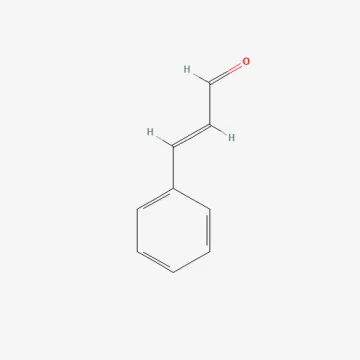
Cinnamaldehyde
Description
Mode of action
Cinnamaldehyde is an organic compound belonging to the phenylpropanoid class, naturally found in the bark of cinnamon trees. In agricultural practice, it is utilized as a contact fungicide with significant insecticidal and acaricidal properties.
The fungicidal mechanism involves disrupting the permeability of fungal cell membranes. The substance induces the destruction of the cytoplasmic membrane, leading to the leakage of cellular content and the rapid death of mycelium and spores of the pathogen.
As an insecticide, cinnamaldehyde affects the nervous system of small insects and mites and can also disrupt the respiratory processes of pests. Due to its contact effect, it effectively eliminates pests upon direct contact with the working solution.
A key feature of this substance is its biodegradability. It does not accumulate in soil or agricultural produce, which allows for its application within integrated pest management and organic crop production systems.
The compound oxidizes rapidly under light and in the soil, converting into safe metabolites. Therefore, it has a short protective residual effect, which requires appropriate application frequency to maintain the necessary level of pathogen control.
What it targets
Cinnamaldehyde is highly effective against a wide range of powdery mildew fungi affecting vegetable, fruit, and ornamental crops. It actively suppresses the development of grape oidium and powdery mildew on cucumbers, tomatoes, and various Rosaceae species.
As an insecticide and acaricide, the substance is used to combat small sucking pests. Primary targets include spider mites, whiteflies, thrips, and various aphid species during the initial stages of plant infestation.
Rates and timing
Application rates depend on the active ingredient concentration in the specific product and the biological objective. Typically, working solutions are prepared at concentrations ranging from 0.1% to 0.5% of the product formulation, depending on the severity of the infestation.
Timing for treatments should align with the first signs of pest or disease emergence. It is recommended to perform spraying during morning or evening hours to eliminate the risk of phytotoxicity caused by intense sunlight.
Restrictions
The main limitation is potential phytotoxicity if the concentration is exceeded or if used during hot weather, which may lead to leaf scorch. It is essential to conduct a preliminary test on a small area of the crop before full-scale application.
The product does not possess systemic activity, so ensuring complete and uniform coverage of the leaf surface with the working solution is critical. If necessary, treatments should be repeated at 7–10 day intervals, adhering to the specific guidelines provided by the product manufacturer.
Status in the European Union
Pending
- CAS number
- 104-55-2
- Category (EU)
- FU - Fungicide
EU status is for reference only and does not replace national registration in your country.