
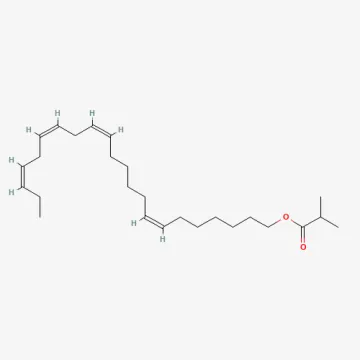
(Z,Z,Z,Z)-7,13,16,19-Docosatetraen-1-yl isobutyrate
Description
Mode of action
This substance belongs to the class of synthetic insect sex pheromones. Its primary function is to mimic the chemical signals that female Lepidoptera release to attract males during the mating period.
The mechanism of action is based on the mating disruption technique. By saturating the orchard atmosphere with pheromone components, males lose their ability to locate females effectively.
Biological efficiency is driven by high specificity: the substance affects only target pest species without harming beneficial entomofauna, such as bees or natural predators.
The application of this product allows for a sharp decrease in pest population density in subsequent generations by preventing mating and the laying of fertile eggs.
Using pheromone-based tools reduces the need for traditional insecticides, lowering the pesticide load on the agroecosystem and promoting integrated pest management principles.
What it targets
The active substance is used mainly against a wide range of Lepidoptera pests, including fruit moths, leafrollers, and cutworms.
The primary crops for use are pome and stone fruit trees, vineyards, as well as various vegetable crops in greenhouse and open field conditions.
- Codling moth (Cydia pomonella)
- Oriental fruit moth (Grapholita molesta)
- Grapevine moth (Lobesia botrana)
- Various species of leaf mining moths
The product's effectiveness is manifested when concentrations are high during the peak flight period of adults, which requires precise population monitoring using traps.
The application is aimed at protecting fruit from damage, which serves as an entry point for secondary infections such as fruit rots.
Rates and timing
Application rates depend on pest population density and orchard characteristics. They are generally calculated based on the number of dispensers per hectare.
Dispensers should be installed immediately before the first generation of pests begins to fly. Ensuring even distribution across the entire area is crucial to avoid blind spots.
The duration of the protective effect typically ranges from 90 to 150 days, covering the activity period of several insect generations.
To achieve maximum effect, the plantation area should be at least 2–5 hectares, as smaller plots are prone to the immigration of fertilized females from adjacent fields.
Annual monitoring using control pheromone traps is recommended to evaluate population density and adjust protection strategies accordingly.
Restrictions
The product requires strict adherence to temperature storage conditions, as high temperatures can lead to premature evaporation of the active ingredient.
Co-application with broad-spectrum insecticides is not recommended unless necessary, as this may suppress beneficial insects that control other pest populations.
The mating disruption method is least effective when initial pest density is extremely high; in such cases, preliminary insecticide treatment is required.
When handling dispensers, personal protective equipment must be used to avoid direct skin contact with the concentrated pheromone.
Disposal of used dispensers must be carried out in accordance with local chemical waste management regulations.
Status in the European Union
Not approved in the EU
- CAS number
- 135459-81-3
EU status is for reference only and does not replace national registration in your country.