
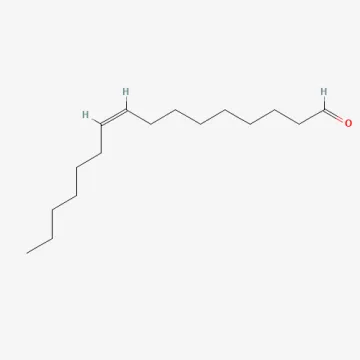
(Z)-9-Hexadecenal
Description
Mode of action
(Z)-9-hexadecenal belongs to the class of synthetic insect sex pheromones used primarily for behavioral modification of specific agricultural pests.
The mechanism of action is based on the mating disruption technique, where the release of the pheromone saturates the field atmosphere.
By mimicking the chemical signal of females, the substance confuses males, preventing them from locating partners, which significantly reduces reproductive success.
This biological control agent offers high specificity, targeting only the intended pest species and ensuring the safety of non-target beneficial organisms.
The efficacy of the treatment relies on the controlled release rate of the chemical from specialized dispensers placed throughout the crop field.
What it targets
The primary targets for (Z)-9-hexadecenal are various species of Lepidoptera, commonly known as moths and caterpillars that threaten crop yields.
It is specifically effective against several economically important pests in vegetable and orchard production that cause damage to fruits, leaves, and stems.
Application is suitable for large-scale agricultural areas where sustained population suppression is required to maintain economic viability.
In addition to mating disruption, the substance is widely used in monitoring traps to detect pest emergence and optimize timing for other control measures.
Targeted control allows producers to protect a wide range of sensitive crops from larval infestation by breaking the lifecycle at the adult stage.
Rates and timing
The application timing is strictly determined by monitoring pest flight patterns, ensuring that pheromone dispensers are deployed before the first mating peaks.
Application rates are calculated based on field acreage and the specific density of dispensers required to maintain the necessary ambient concentration.
Dispensers should be installed before the expected seasonal emergence of the target moth species to ensure optimal protection.
Maintenance schedules must be followed to replace dispensers according to the manufacturer’s instructions, accounting for environmental degradation over time.
Consistent monitoring of pheromone levels and insect activity is essential for adapting control strategies throughout the growing season.
Restrictions
A primary limitation is that effectiveness can be significantly reduced in small or fragmented fields due to high rates of pheromone dispersion by wind.
The substance is sensitive to extreme heat and high UV exposure, which can accelerate degradation and limit the effective lifespan of the dispensers.
Operators should wear protective gloves and gear when handling dispensers to prevent accidental contamination, although the risk to humans is low.
Storage should strictly adhere to temperature-controlled conditions in sealed containers to preserve the stability and purity of the active ingredient.
Integrated management plans should avoid excessive use of broad-spectrum insecticides that could disrupt the overall ecological balance of the field.
Status in the European Union
Approved in the EU
- CAS number
- 56219-04-6
- Approved from
- 01.09.2022
- Approval until
- 30.08.2037
EU status is for reference only and does not replace national registration in your country.