
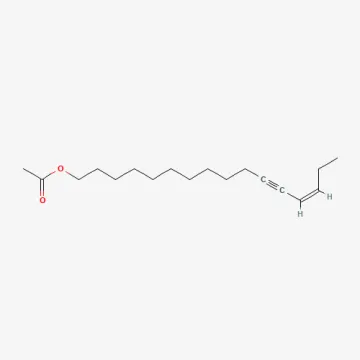
(Z)-13-hexadecen-11-yn-1-yl acetate
Description
Mode of action
This substance belongs to the class of synthetic insect sex pheromones that mimic natural communication signals between individuals. In agronomy, it is used as a key component in mating disruption or attraction strategies to control Lepidopteran pests.
The disruption mechanism is based on saturating the air around the crop with the pheromone. As a result, males lose their ability to locate females for mating, which disrupts the reproductive cycle of the pest population.
When used in pheromone traps, the substance acts in a targeted manner, attracting individuals of a specific species to a source with an adhesive layer or an insecticide. This allows for precise monitoring of pest population dynamics in the field.
The substance is highly specific, meaning it affects only the target insect species. It does not negatively impact other organisms, including beneficial entomophages and pollinators, making it safe for the ecosystem.
The chemical stability of the product ensures long-lasting efficacy when application guidelines are followed, allowing for pest control throughout the entire adult flight period.
What it targets
The primary targets for this group of pheromones are pests from the order Lepidoptera, in particular members of the Pyralidae family and certain species of noctuids.
Products based on this compound are used to protect orchards, vineyards, and certain vegetable crops from concealed larvae.
The efficacy of the pheromone is most evident in conditions of moderate to high pest population density, where it is crucial to reduce the egg-laying rate.
Using this substance helps prevent damage to fruits and shoots, which significantly increases crop quality and reduces reliance on broad-spectrum insecticides.
- Leafrollers (various species)
- Stem borers in fruit crops
- Stored product pests
Rates and timing
Application timing is determined based on pheromone monitoring data, which indicates the onset and peak flight times of specific pest species in a given region.
Application rates depend on the product form: for dispensers, the number of points per hectare is calculated to ensure the required vapor concentration in the air.
Installation of baits or dispensers is recommended before the mass emergence of the first generation of pests to prevent the formation of breeding clusters.
The duration of a single dispenser's action is typically 60 to 90 days, which often covers the entire critical crop vegetation period.
Replacement frequency depends on weather conditions and the evaporation rate of the active ingredient, which is specified in the manufacturer's instructions.
Restrictions
The efficacy of pheromone protection can be reduced during extreme temperatures or strong winds, which facilitate the rapid dissipation of active vapors.
In cases of extremely high pest population density, it is recommended to use pheromones within an integrated pest management (IPM) system combined with other control methods.
Strict adherence to storage rules in a cool, dark place is necessary, as exposure to UV light and high temperatures causes rapid degradation of the active component.
When handling the products, avoid direct contact with skin and mucous membranes by using basic personal protective equipment.
Do not use the product in enclosed spaces without proper concentration monitoring, and avoid co-application with pesticides that may mask the pheromone scent.
Status in the European Union
Not approved in the EU
- CAS number
- 78617-58-0
- ADI
- Not appl.
- ARfD
- Not appl.
- AOEL
- Not appl.
EU status is for reference only and does not replace national registration in your country.